The Earth Is a Great Memory
Communication Design as an Act of Mnestic Resistance
DOI:
https://doi.org/10.82068/pgjournal.2026.23.42.07Keywords:
Mnestetic Resistance, Communication Design, Mnemotope, Mnemophoto, OtotextAbstract
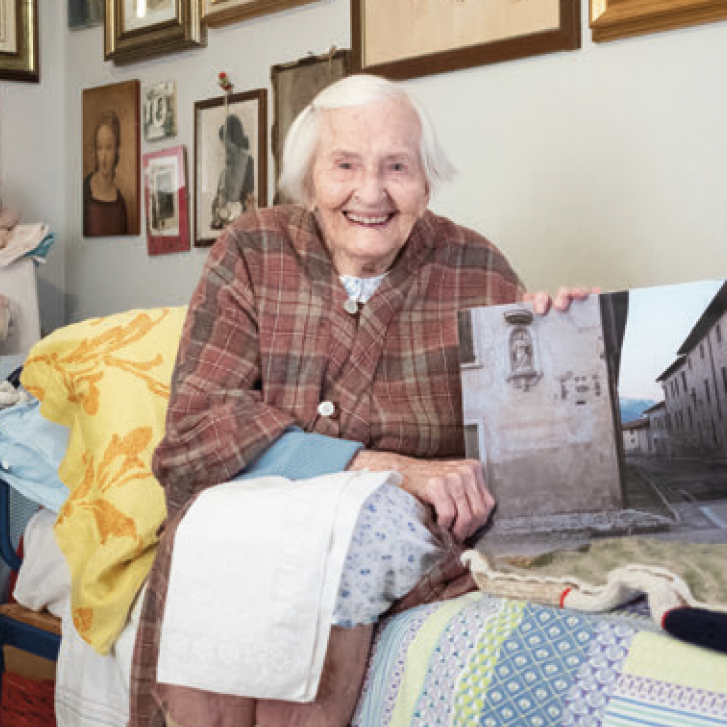
Communication design today faces a saturated and accelerated ecosystem that weakens its critical capacity as a cultural agent. It shares this systemic vulnerability with memory, especially individual memory, now overwritten by hyper-visibility and the delegation of recollection to technical devices, generating forms of marginalization and atrophy in the representation of the self. This text investigates how the discipline can become a practice of mnestic resistance, capable of recognizing, translating, and remedying such vulnerability through a shared action, considering interdisciplinary exchange as a resource. The notion of the mnemotope, understood as a non-institutional place of memory where traces, emotions, and lived experiences intertwine, offers an interpretive framework for understanding memory as a situated and relational phenomenon. Within this perspective lies Mnemofoto, a phototextual project that gathers, photographs, and restores places of individual memory. The project reactivates intimate narratives and restores authorship to the subjects involved, transforming the designer into a mediator of the relationship between place, memory, and testimony. The subsequent exhibition The Earth Is a Great Memory, held at the Vincenzo Agnetti Archive, amplifies these dynamics by placing the phototexts in dialogue with the artist's poetics and works, particularly with his concept of dimenticato a memoria, "forgotten by heart".
References
Agamben, G. (2006). Che cos’è un dispositivo?. Nottetempo.
Agnetti, V. (1978). Libro dimenticato a memoria (1969) in Libro (particolare). Artra Studio.
Agnetti, G. (2024). Searching for the hidden memory. In Galasso, C. S., Mnemotopes. Designing the memory of places. FrancoAngeli.
Bachelard, G. (1957). La poétique de l’espace. Presses Universitaires de France.
Baule, G., & Caratti, E. (a cura di). (2016). Design è traduzione. FrancoAngeli.
Bieling, T. (2019). Design (&) Activism. How designers engage with social issues. Design Mimesis International.
Boragina, F. (a cura di). (2024). Scritti d'arte 1959-1981. Abscondita.
Casey, E. (1987). Remembering: A Phenomenological Study. Indiana University Press.
Chiocchetti, F. (2019). What is a Photo-Text Book?. The Photobook Review 016. Aperture Magazine. https://aperture.org/editorial/pbr-photo-text-book/.
Citton, Y. (2014). Pour une écologie de l’attention. Seuil.
Crary, J. (2013). 24/7: Late capitalism and the ends of sleep. Verso.
Erll, A. & Rigney, A. (Eds.). (2009). Mediation, remediation, and the dynamics of cultural memory. Walter de Gruyter.
Fabris, A. (2006). Etica della comunicazione. Carocci.
Fabris, A. (2018). Etica per le tecnologie dell'informazione e della comunicazione. Carocci.
Fontcuberta, J. (2018). La furia delle immagini. Note sulla postfotografia. Einaudi.
Fuad-Luke, A. (2009). Design activism: Beautiful strangeness for a sustainable world. Earthscan.
Galasso, C. S. (2024a). Mnemotopes. Designing the memory of places. FrancoAngeli.
Galasso, C. S. (2024b). Mnemotope as a Safe Place: The Wind Phone in Japan. Open Cultural Studies, vol. 8, no. 1, pp. 20240034. https://doi.org/10.1515/culture-2024-0034
Grechi, G. (2021). Decolonizzare il museo. Mostre, dispositivi, pratiche. Mimesis.
Habermas, J. (2017). Teoria dell’agire comunicativo. Il Mulino.
Halbwachs, M. (1925). Les cadres sociaux de la mémoire. Alcan.
Halbwachs, M. (1950). La mémoire collective. Albin Michel.
Han, B.-C. (2012). La società della stanchezza. Nottetempo.
Han, B.-C. (2014). La società della trasparenza. Nottetempo.
Hartog, F. (2012). La temporalizzazione del tempo. Un lungo cammino. In Maj, B. (a cura di). Discipline filosofiche. Tempo e temporalità storica, XXII I. Quodlibet.
Hoskins, A. (2017). Digital memory studies: Media pasts in transition. Routledge.
Hubner, E., & Dirksmeier, P. (2023). Geography of placemories: deciphering spatialised memories. Cultural Geographies, 30 (1), 103-121. https://doi.org/10.1177/14744740221123564
Julier, G. (2013). From design culture to design activism. Design and Culture, 5(2), 215–236.
Manghetti, G. (2022). Funzione e ruoli dell’archivio d’artista. In Donati A. & Tibertelli De Pisis F. (a cura di), L’archivio d’artista: Principi, regole e buone pratiche. Johan & Levi.
Markussen, T. (2013). The disruptive aesthetics of design activism: Enacting design between art and politics. Design Issues, 29 (1), 38-50.
Meneguzzo, M. (a cura di). (2017). Agnetti. A cent'anni da adesso. Catalogo della mostra. Palazzo Reale, Milano, 4 luglio - 24 settembre 2017. Silvana editoriale.
Merewether, C. (2006) (Ed.). The archive. MIT Press.
Mitchell, W. J. T. (2005). What do pictures want? The lives and loves of images. University of Chicago Press.
Montani, P. (a cura di). (1986). Sergej M. Ejzenstejn. Il montaggio. Marsilio.
Montani, P. (2017). Tre forme di creatività: tecnica, arte, politica. Cronopio.
Nora, P. (1984). Les lieux de mémoire (Vols. 1-3). Gallimard.
Perazzi, M. (1972). Non dipingo i miei quadri. Il concettuale Agnetti cerca di spiegarsi. In Corriere della Sera, 20 febbraio 1972, Milano.
Rosa, H. (2015). Accelerazione e alienazione. Per una teoria critica del tempо nella tarda modernità. Einaudi.
Smith, S., & Watson, J. (2010). Reading autobiography: A guide for interpreting life narratives. University of Minnesota Press.
Stiegler, B. (1994). La technique et le temps. 1. La faute d’Épiméthée. Galilée.
Tadié, J.-Y., & Tadié, M. (2000). Il senso della memoria. Dedalo.
Tarpino, A. (2005). Memoria e crisi della società del ricordo. In MEMORIA E RICERCA,10/2002.
Turri, E. (1998). Il paesaggio come teatro. Una storia del paesaggio in Italia. Marsilio.
Turri, E. (2004). Il paesaggio e il silenzio. Marsilio.
Tuan, Y.-F. (1974). Topophilia: A study of environmental perception, attitudes, and values. Columbia University Press.
Verzotti, G. (2008). Vincenzo Agnetti. In Vincenzo Agnetti Retrospettiva 1967-1980, catalogo della mostra a cura di Achille Bonito Oliva e Giorgio Verzotti (Mart, Museo di Arte Moderna e Contemporanea di Trento e Rovereto, 23 febbraio -1 giugno 2008), Skira.
Zingale, S. (a cura di). (2022). Design e alterità. Comprendere l’Altro, pensare il possibile. FrancoAngeli.
Zuliani, S. (2014). Aprire lo studio. Una premessa. In Zuliani, S. (a cura di), Atelier d’artista. Gli spazi di creazione dell’arte dall’età moderna al presente. Mimesis.
Downloads
Published
Issue
Section
License
Copyright (c) 2026 Progetto Grafico Journal

This work is licensed under a Creative Commons Attribution-NonCommercial-ShareAlike 4.0 International License.