Communication Design in the Age of AI Cultures
A Relational Map for a Paradigm Shift
DOI:
https://doi.org/10.82068/pgjournal.2026.23.43.04Keywords:
Communication design, Artificial intelligence, Design theory, Design methodology, Design educationAbstract
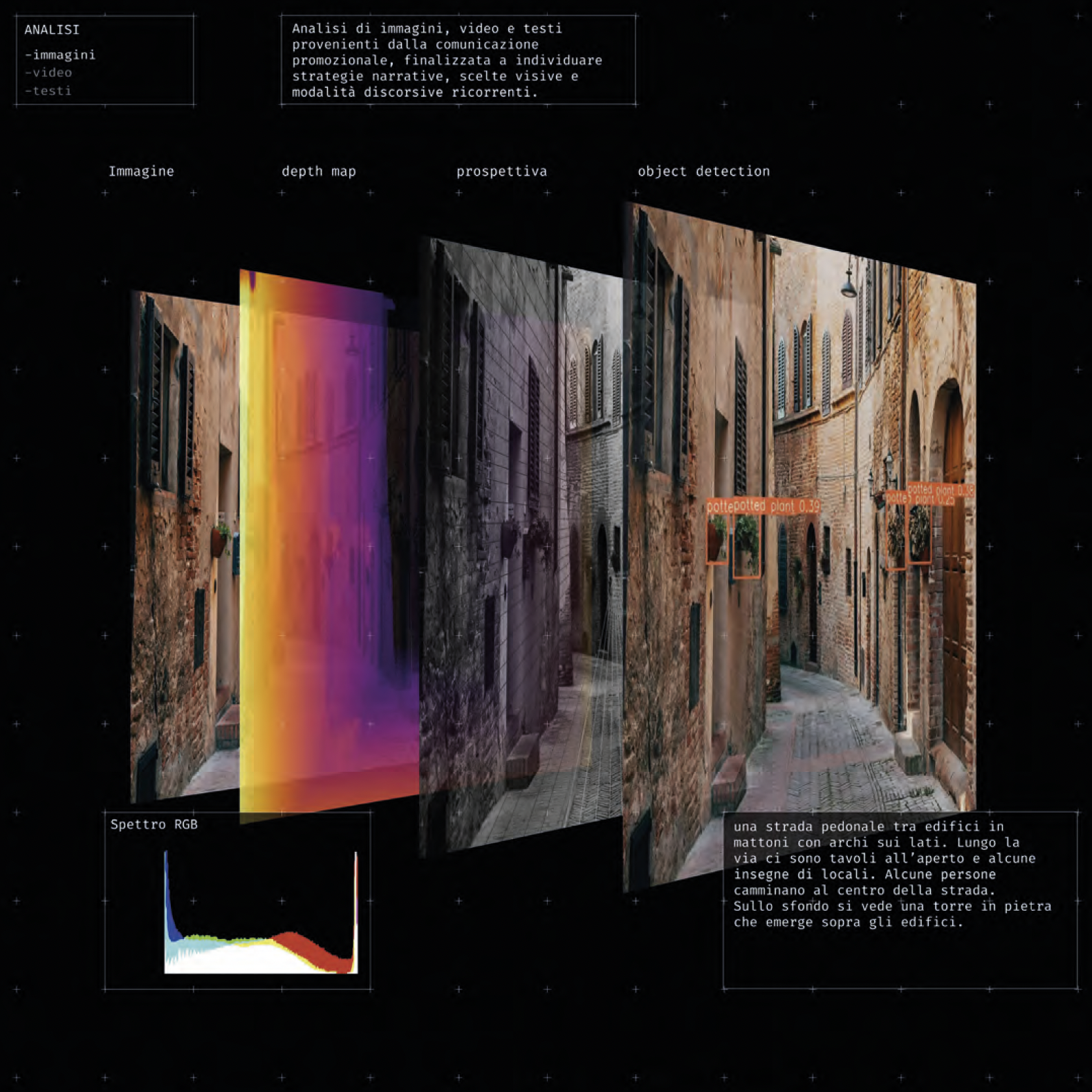
As artificial intelligence becomes established as a technological infrastructure, its effects extend beyond the technical domain, reshaping cultural, social, and epistemological processes. Although this cross-cutting nature reflects the systemic scale of the phenomenon, it also creates a degree of instability in the surrounding discourse, where heterogeneous levels of analysis tend to overlap, fostering a predominantly substitutionist framing centred on the automation of design activities. Building on this observation, the paper offers a theoretical and programmatic inquiry into the different positions AI assumes in relation to communication design. It identifies five main relationships: AI as an environment, transforming the contexts in which content is produced and circulated; as an interpretative tool, enabling the analysis of complex communication systems; as a design tool, introducing models of delegation and collaboration into the design process; as design material, embedded in communication artefacts and shaping their relational capacities; and as an object of design intervention, requiring forms of mediation, representation, and interpretation that can make intelligent systems understandable and governable. Across these relationships, AI also serves a reflexive function, acting as an epistemic device that calls into question fundamental categories such as authorship, creativity, competence, judgement, and responsibility. The transformations introduced by AI therefore require renewed engagement with the history, foundations, and pedagogical traditions of the discipline – not as a legacy to be preserved, but as a field through which continuities and discontinuities in the ongoing transformation can be recognised. The proposed model offers an open interpretative framework for situating AI within a disciplinary trajectory and identifying what it radicalises, transforms, and destabilises in communication design.
References
Ananny, M., & Crawford, K. (2018). Seeing without knowing: Limitations of the transparency ideal and its application to algorithmic accountability. New Media & Society, 20(3), 973–989. https://doi.org/10.1177/1461444816676645
Anceschi, G., Baule, G., D’Ambrosio, G., Grimaldi, P., Iliprandi, G., Lussu, G., Marangoni, A., & Torri, G. (1989). Carta del progetto grafico: Tesi per un dibattito sul progetto della comunicazione. AIAP.
Arnold, T., & Tilton, L. (2019). Distant viewing: Analyzing large visual corpora. Digital Scholarship in the Humanities, 34(Supplement_1), i3–i16. https://doi.org/10.1093/llc/fqz013
Arnold, T., & Tilton, L. (2024). Explainable Search and Discovery of Visual Cultural Heritage Collections with Multimodal Large Language Models. In W. Haverals, M. Koolen, & L. Thompson (Eds.), Proceedings of the Computational Humanities Research Conference 2024 (Vol. 3834, pp. 559–574). CEUR. https://ceur-ws.org/Vol-3834/#paper1
Bengio, Y., Courville, A., & Vincent, P. (2013). Representation Learning: A Review and New Perspectives. IEEE Transactions on Pattern Analysis and Machine Intelligence, 35(8), 1798–1828. https://doi.org/10.1109/TPAMI.2013.50
Bianchi, F., Kalluri, P., Durmus, E., Ladhak, F., Cheng, M., Nozza, D., Hashimoto, T., Jurafsky, D., Zou, J., & Caliskan, A. (2023). Easily Accessible Text-to-Image Generation Amplifies Demographic Stereotypes at Large Scale. 2023 ACM Conference on Fairness, Accountability, and Transparency, 1493–1504. https://doi.org/10.1145/3593013.3594095
Bolter, J. D., & Grusin, R. (1999). Remediation: Understanding New Media. MIT Press.
Bratton, B. H. (2016). The Stack: On Software and Sovereignty. The MIT Press. https://doi.org/10.7551/mitpress/9780262029575.001.0001
Burrell, J. (2016). How the machine ‘thinks’: Understanding opacity in machine learning algorithms. Big Data & Society, 3(1), 2053951715622512. https://doi.org/10.1177/2053951715622512
Caffagni, D., Cocchi, F., Barsellotti, L., Moratelli, N., Sarto, S., Baraldi, L., Baraldi, L., Cornia, M., & Cucchiara, R. (2024). The Revolution of Multimodal Large Language Models: A Survey. In L.-W. Ku, A. Martins, & V. Srikumar (Eds.), Findings of the Association for Computational Linguistics: ACL 2024 (pp. 13590–13618). Association for Computational Linguistics. https://doi.org/10.18653/v1/2024.findings-acl.807
Chakraborty, S., Wei, Z., Kelton, C., Ahn, S., Balasubramanian, A., Zelinsky, G. J., & Samaras, D. (2023). Predicting Visual Attention in Graphic Design Documents. IEEE Transactions on Multimedia, 25, 4478–4493. https://doi.org/10.1109/TMM.2022.3176942
Choudhury, M. M., Eisenbart, B., & Kuys, B. (2025). Artificial intelligence (AI) in the design process – a review and analysis on generative AI perspectives. Proceedings of the Design Society, 5, 631–640. https://doi.org/10.1017/pds.2025.10077
Crawford, K. (2021). Atlas of AI: Power, politics, and the planetary costs of artificial intelligence. Yale University Press.
Eubanks, V. (2019). Automating inequality: How high-tech tools profile, police, and punish the poor (First Picador edition). Picador St. Martin’s Press.
Frascara, J. (2004). Communication design: Principles, methods, and practice. Allworth Communications, Inc.
Gao, J., Gebreegziabher, S. A., Choo, K. T. W., Li, T. J.-J., Perrault, S. T., & Malone, T. W. (2024). A Taxonomy for Human-LLM Interaction Modes: An Initial Exploration. Extended Abstracts of the CHI Conference on Human Factors in Computing Systems, CHI EA ’24, 1–11. https://doi.org/10.1145/3613905.3650786
Giaccardi, E., & Redström, J. (2020). Technology and More-Than-Human Design. Design Issues, 36(4), 33–44. https://doi.org/10.1162/desi_a_00612
Gilardi, F., Alizadeh, M., & Kubli, M. (2023). ChatGPT outperforms crowd workers for text-annotation tasks. Proceedings of the National Academy of Sciences, 120(30), e2305016120. https://doi.org/10.1073/pnas.2305016120
Gillespie, T. (2010). The politics of ‘platforms.’ New Media & Society, 12(3), 347–364. https://doi.org/10.1177/1461444809342738
Gillespie, T. (2014). The Relevance of Algorithms. In T. Gillespie, P. J. Boczkowski, & K. A. Foot (Eds.), Media Technologies (pp. 167–194). The MIT Press. https://doi.org/10.7551/mitpress/9780262525374.003.0009
Goldstein, J. A., & Lohn, A. (2024, January 23). Deepfakes, Elections, and Shrinking the Liar’s Dividend [Expert Brief]. Brennan Center for Justice.
Goldstein, J. A., Sastry, G., Musser, M., DiResta, R., Gentzel, M., & Sedova, K. (2023). Generative Language Models and Automated Influence Operations: Emerging Threats and Potential Mitigations (Version 1). arXiv. https://doi.org/10.48550/ARXIV.2301.04246
Gonzales, S. (2024, August 6). AI Literacy and the New Digital Divide: A Global Call for Action. UNESCO. https://www.unesco.org/en/articles/ai-literacy-and-new-digital-divide-global-call-action
Helmus, T. C., & Chandra, B. (2024). Generative Artificial Intelligence Threats to Information Integrity and Potential Policy Responses. RAND Corporation. https://doi.org/10.7249/PEA3089-1
LeCun, Y., Bengio, Y., & Hinton, G. (2015). Deep learning. Nature, 521(7553), 436–444. https://doi.org/10.1038/nature14539
Liao, Q. V., Gruen, D., & Miller, S. (2020). Questioning the AI: Informing Design Practices for Explainable AI User Experiences. Proceedings of the 2020 CHI Conference on Human Factors in Computing Systems, 1–15. https://doi.org/10.1145/3313831.3376590
Liao, Q. V., & Varshney, K. R. (2021). Human-Centered Explainable AI (XAI): From Algorithms to User Experiences (Version 5). arXiv. https://doi.org/10.48550/ARXIV.2110.10790
Lin, Z., & Riedl, M. (2023). An Ontology of Co-Creative AI Systems (Version 1). arXiv. https://doi.org/10.48550/ARXIV.2310.07472
Long, D., & Magerko, B. (2020). What is AI Literacy? Competencies and Design Considerations. Proceedings of the 2020 CHI Conference on Human Factors in Computing Systems, 1–16. https://doi.org/10.1145/3313831.3376727
Luccioni, A. S., Akiki, C., Mitchell, M., & Jernite, Y. (2023). Stable Bias: Analyzing Societal Representations in Diffusion Models. https://doi.org/10.48550/ARXIV.2303.11408
Lyu, H., Huang, J., Zhang, D., Yu, Y., Mou, X., Pan, J., Yang, Z., Wei, Z., & Luo, J. (2025). GPT-4V(ision) as A Social Media Analysis Engine. ACM Transactions on Intelligent Systems and Technology, 16(3), 1–54. https://doi.org/10.1145/3709005
Manovich, L., & Arielli, E. (2024). Artificial Aesthetics: Generative AI, Art and Visual Media. Manovich.net. https://manovich.net/index.php/projects/artificial-aesthetics
Mehrabi, N., Morstatter, F., Saxena, N., Lerman, K., & Galstyan, A. (2021). A Survey on Bias and Fairness in Machine Learning. ACM Computing Surveys, 54(6), 115:1-115:35. https://doi.org/10.1145/3457607
Mikolov, T., Chen, K., Corrado, G., & Dean, J. (2013). Efficient Estimation of Word Representations in Vector Space (Version 3). arXiv. https://doi.org/10.48550/ARXIV.1301.3781
Morris, M. R., Cai, C. J., Holbrook, J., Kulkarni, C., & Terry, M. (2023). The Design Space of Generative Models. https://doi.org/10.48550/ARXIV.2304.10547
Nieborg, D. B., & Poell, T. (2018). The platformization of cultural production: Theorizing the contingent cultural commodity. New Media & Society, 20(11), 4275–4292. https://doi.org/10.1177/1461444818769694
OpenAI. (2022, November 30). Introducing ChatGPT. OpenAI. https://openai.com/index/chatgpt/
Pasquinelli, M. (2023). The eye of the master: A social history of artificial intelligence. Verso.
Rockmore, D., Chen, J., Jebelli, M. J. L., Riddell, A., & Stropkay, H. (2025). On the literary landscapes of vector embeddings. Computational Humanities Research, 1, e18. https://doi.org/10.1017/chr.2025.10015
Selbst, A. D., Boyd, D., Friedler, S. A., Venkatasubramanian, S., & Vertesi, J. (2019). Fairness and Abstraction in Sociotechnical Systems. Proceedings of the Conference on Fairness, Accountability, and Transparency, 59–68. https://doi.org/10.1145/3287560.3287598
Singh, S., Hindriks, K., Heylen, D., & Baraka, K. (2025). A Systematic Review of Human-AI Co-Creativity (Version 2). arXiv. https://doi.org/10.48550/ARXIV.2506.21333
Stanford Center for Research on Foundation Models. (2021). On the opportunities and risks of foundation models. Stanford Institute for Human-Centered Artificial Intelligence. https://crfm.stanford.edu/report.html
Stanford Institute for Human-Centered Artificial Intelligence. (2025). Artificial Intelligence Index Report 2025. Stanford University. https://hai.stanford.edu/ai-index/2025-ai-index-report
Striphas, T. (2015). Algorithmic culture. European Journal of Cultural Studies, 18(4–5), 395–412. https://doi.org/10.1177/1367549415577392
Torricelli, M., Martino, M., Baronchelli, A., & Aiello, L. M. (2023). The role of interface design on prompt-mediated creativity in Generative AI (Version 2). arXiv. https://doi.org/10.48550/ARXIV.2312.00233
Turkle, S. (2011). Alone together: Why we expect more from technology and less from each other. Basic Books.
Vaccari, C., & Chadwick, A. (2020). Deepfakes and Disinformation: Exploring the Impact of Synthetic Political Video on Deception, Uncertainty, and Trust in News. Social Media + Society, 6(1), 2056305120903408. https://doi.org/10.1177/2056305120903408
Wardle, C., & Derakhshan, H. (2017). Information Disorder: Toward an Interdisciplinary Framework for Research and Policy Making. Council of Europe.
Weisz, J. D., He, J., Muller, M., Hoefer, G., Miles, R., & Geyer, W. (2024). Design Principles for Generative AI Applications. Proceedings of the CHI Conference on Human Factors in Computing Systems, 1–22. https://doi.org/10.1145/3613904.3642466
Zhang, H., Li, Z., Zhu, Y., Xu, H., Wang, P., Zhu, H., Zhou, J., & Zhang, J. (2025). Can Large Language Models Help Multimodal Language Analysis? MMLA: A Comprehensive Benchmark (Version 2). arXiv. https://doi.org/10.48550/ARXIV.2504.16427
Ziems, C., Held, W., Shaikh, O., Chen, J., Zhang, Z., & Yang, D. (2024). Can Large Language Models Transform Computational Social Science? Computational Linguistics, 50(1), 237–291. https://doi.org/10.1162/coli_a_00502
Downloads
Published
Issue
Section
License
Copyright (c) 2026 Progetto Grafico Journal

This work is licensed under a Creative Commons Attribution-NonCommercial-ShareAlike 4.0 International License.