Design for Archival Research
Tools for the Continuing Education of Designers in Corporate Archives
DOI:
https://doi.org/10.82068/pgjournal.2026.23.43.07Keywords:
Digital Cultural Heritage, Industrial Archives, Archival User Studies, Design Cultures, Visual DesignAbstract
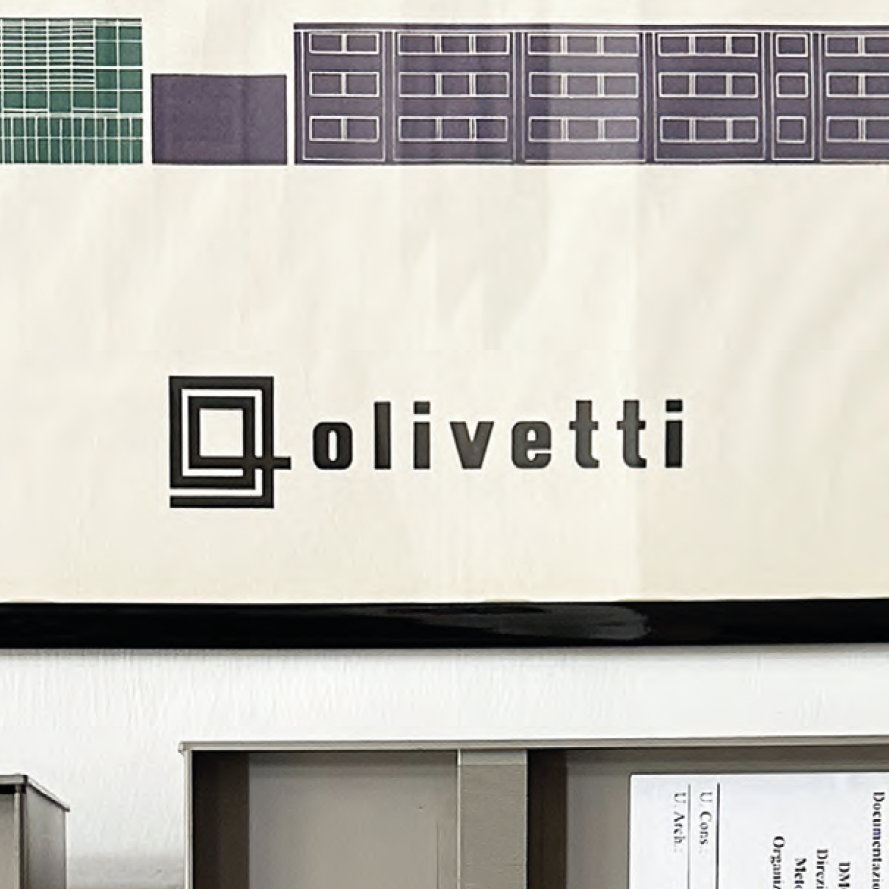
This contribution explores the potential of corporate archives as a resource for designer education, recognising them as a context for reconstructing the relationships between design culture, production processes, and historical contexts. It examines the potential of the archival experience, as mediated by communication design, as a tool for the continuing development of design thinking. A methodological framework was developed by relating the model of archival research expertise to the cognitive processes involved in design research. This framework was tested through the exploratory pilot workshop Design for Archival Research, which took place at the Olivetti Archives in Ivrea. This workshop guided participants through the process of formulating a research question and selecting and interpreting sources using specific graphic mediation artefacts. Pre- and post-workshop questionnaires, field observation and a focus group were used to collect qualitative evidence of the experience. Preliminary results highlight three main functions of communication design: guiding cognitive access by facilitating the recursive reformulation of the research question; mediating digital access by providing complementary visualisations that reveal relationships within the archival structure; and supporting physical engagement with sources through adaptable interpretive tools. Each function provides educational insights into developing the ability to redefine problems, build connections and foster interpretive autonomy. The research suggests the potential for reciprocal activation between the methodologies of design history, archival research and design practice, leading to shared strategies for education and the valorisation of corporate archival heritage.
References
Accornero, C. (2021). L’azienda Olivetti e la cultura: Tra responsabilità e creatività (1919–1992). Donzelli Editore.
Anceschi, G. (2003). Neurath, Isotype e la terza competenza. Progetto Grafico, 2, 20-29.
Altea, G., & Camarda, A. (a cura di). (2022). Lo showroom Olivetti a New York: Costantino Nivola e la cultura italiana negli Stati Uniti. Edizioni di Comunità.
Associazione Archivio Storico Olivetti. (n.d.-a). Archivi Digitali Olivetti. https://archividigitaliolivetti.archiviostoricolivetti.it/esplora
Baldacci, C. (2016). Archivi impossibili: un’ossessione dell’arte contemporanea. Johan & Levi.
Bulegato, F. (2008). I musei d’impresa. Dalle arti industriali al design. Carocci Editore. (pp. 37–38).
Bosco, A., Bulegato, F., & Gasparotto, S. (2023). The Digital Archive as An Inclusive Tool for Knowledge Construction Through Design Practices. Diid, (DIGITAL SPECIAL ISSUE 1), 10. https://doi.org/10.30682/diiddsi23t2c
Caccamo, A., Candida, F., Carella, G., & Turco, A. (2025). Archivi d'impresa, memoria storica e dialogo culturale. In Conferenza annuale della Società Italiana di Design. Design and Research. (pp. 621–630).
Cardano, M. (2020). Argomenti per la ricerca qualitativa: Disegno, analisi, scrittura. Il Mulino.
Carney, S. (2026, 1 giugno). Form follows feeling. LinkedIn. https://www.linkedin.com/pulse/form-follows-feeling-copenhagen-institute-of-interactio-19ha/
Chapman, Joyce. 2010. Observing Users. Journal of Archival Organization 8(1): 4-30. https://doi.org/10.1080/15332748.2010.484361.
Ciandrini, P. (2021). Archivi d’impresa. Gestione documentale e valorizzazione: il contesto digitale. Editrice Bibliografica.
Creswell, J. W., & Creswell, J. D. (2022). Research design: Qualitative, quantitative, and mixed methods approaches (6th ed.). SAGE Publications.
Daniels, M., & Yakel, E. (2010). Archival user studies. The American Archivist.
Design Council. (2019). What is the framework for innovation? Design Council’s evolved Double Diamond. https://www.designcouncil.org.uk/news-opinion/what-framework-innovation-design-councils-evolved-double-diamond
Duff, W.M., Yakel, E., & Tibbo, H. (2013). Archival Reference Knowledge. The American Archivist, 76(1), 68–94. http://www.jstor.org/stable/43489650
Fry, B. (2008). Visualizing data. O'Reilly Media.
Gemelli, G. (2005). Olivetti e la cultura nell’impresa responsabile. FrancoAngeli.
Liboni, M., Mucchetti, F. ., & Peruccio, P. P. . (2026). From Data to Design: AI, Blockchain, and New Frontiers in Digital Archives. Diid, (87), 82–97. https://doi.org/10.30682/diid8725f
Klein, G., Moon, B., & Hoffman, R. R. (2006). Making sense of sensemaking 1. IEEE Intelligent Systems, 21(4), 70–73. https://doi.org/10.1109/MIS.2006.75
Kornbluh, A. (2024). Immediacy, or the style of too late capitalism. Verso Books.
Kolb, A. Y., & Kolb, D. A. (2006). Learning styles and learning spaces. In Learning styles and learning: A key to meeting the accountability demands in education (pp. 45–91)
Maldonado, T. (1995). Che cos'è un intellettuale? avventure e disavventure di un ruolo. Feltrinelli.
Margolin, V. (Ed.). (1989). Design discourse: History, theory, criticism. University of Chicago Press.
Meirelles, I. (2013). Design for information: An introduction to the histories, theories. Rockport Publishers.
Meschini, F. (2018). Reti, memoria e narrazione. Edizioni Sette Città.
Panella, A. (1934). Francesco Bonaini e l’ordinamento degli Archivi italiani nei primi anni del Regno. Archivio Storico Italiano, 92 (Serie 7, Vol. 21)(2 (350)), 281–307. http://www.jstor.org/stable/26242444
Penati, A. (2016). Traduzioni artefattuali. Le molteplici forme della traduzione progettuale. In Baule G. & Caratti E. (a cura di). Design è Traduzione. pp.193–213. FrancoAngeli.
Quaggiotto, M. (2025). Modelli di scrittura per archivi incompleti. Progetto Grafico: International Journal of Communication Design, 22(41), 184–201. https://doi.org/10.82068/pgjournal.2025.22.41
Rittner, J. (2020). Teaching design history. Medium (SVA MA Design Research, Writing and Criticism). https://dcrit.medium.com/teaching-design-history-e0ad6c5fd72c
Schön, D. A. (1983). The reflective practitioner: How professionals think in action. Basic Books.
Scodeller, D. (2022). Archivi digitali e fonti documentali del design. AIS/Design Journal Storia e Ricerche. ISSN 2281-7603
Secrest, M. (2022). Il caso Olivetti: La IBM, la CIA, la guerra fredda e la misteriosa fine del primo personal computer della storia. Rizzoli.
Trocchianesi, R., & Bollini, L. (2023). Design, digital humanities, and information visualization for cultural heritage. Multimodal Technologies and Interaction, 7(11), 102. https://doi.org/10.3390/mti7110102
Williams, D. (2024). Inviting Knowledge: Enhancing Archival Discovery through Information Design. College & Research Libraries, 85(4), 583. https://doi.org/10.5860/crl.85.4.583
Yakel, E., & Torres, D. A. (2003). AI: Archival Intelligence and User Expertise. The American Archivist, 66(1), 51–78. http://www.jstor.org/stable/40294217.
Lupton, E. (2004). Thinking with Type. A Critical Guide for Designers, Writers, Editors & Students. Princeton Architectural Press.
Lima, M. (2011). Visual complexity: Mapping patterns of information. Princeton Architectural Press.
Atlante Calvino. (n.d.). Atlante Calvino: Letteratura e visualizzazione. https://atlantecalvino.unige.ch/navigation?lang=it
Nokia Design Archive. (n.d.). Nokia Design Archive. Aalto University. https://nokiadesignarchive.aalto.fi/index.html
Massari, S., Damiano, D., & Capri, A. (2026). Rethinking Assessment in Event-Based Design Education. Diid, (87), 114–133. https://doi.org/10.30682/diid8725h
Moriarty, C. (2016), ‘Monographs, Archives, and Networks: Representing Designer Relationships’, Design Issues, 32(4): 52–63.
Julier, G. (2026). Doing Design Culture Studies; Practicing Design Culture. Design and Culture, 18(1), 11–31. https://doi.org/10.1080/17547075.2025.2575111.
Downloads
Published
Issue
Section
License
Copyright (c) 2026 Progetto Grafico Journal

This work is licensed under a Creative Commons Attribution-NonCommercial-ShareAlike 4.0 International License.