From Pixel to Prompt
Susan Kare and Design as Mediation at Technological Thresholds
DOI:
https://doi.org/10.82068/pgjournal.2026.23.43.08Keywords:
Artificial Intelligence, Design, Graphic Design, User Iterface, Susan KareAbstract
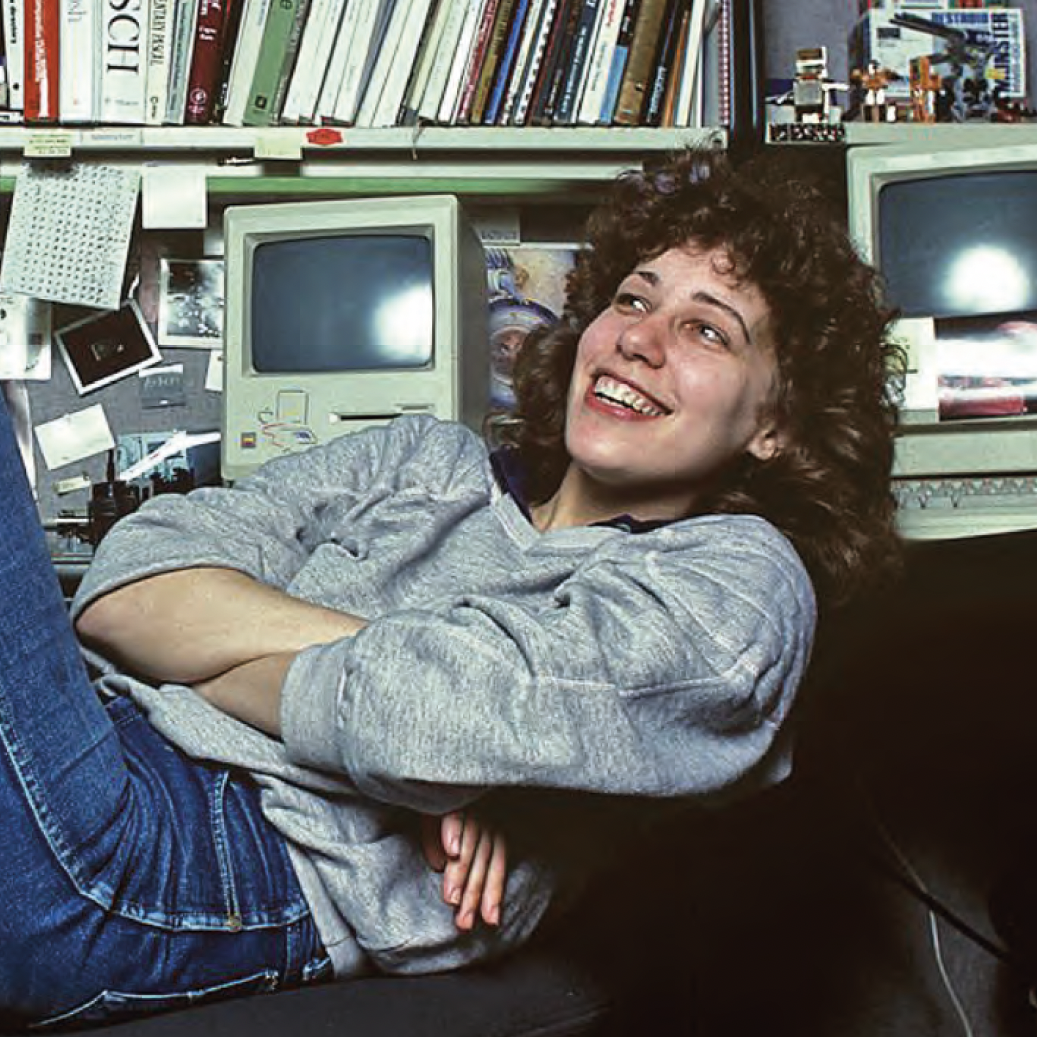
Generative artificial intelligence makes images, icons, layouts, and stylistic variations available with increasing speed. This acceleration shifts the design problem from the production of form to the construction of the criteria that make form meaningful, understandable, and responsible. The paper reads this shift through the case of Susan Kare and the Macintosh icons, understood as an example of design mediation at a technological threshold. In the 1980s, the personal computer required a visual language capable of translating abstract computer commands into recognizable actions. Kare responded to this condition by working between graph paper, bitmap grids, and the constraints of 32×32 pixels, turning technical scarcity into a grammar of the interface. The comparison with generative AI highlights a different design condition: no longer the scarcity of signs, but the excess of outputs. From pixel to prompt, the designer's task remains the construction of mediations between technical possibility, context of use, and cultural meaning. Automation does not marginalize design; it makes its critical function more explicit: selecting, orienting, arguing, and making machine-generated outputs assessable. From an educational perspective, this transformation requires historical, semiotic, and critical competences able to distinguish the generation of forms from the production of meaning.
References
Blackwell, L. (1998). I caratteri del XX secolo. Leonardo Arte, Milano.
Blackwell, L. (2000). The End of Print: The Graphic Design of David Carson. Laurence King, London.
Bollini, L. (2016). Le Pleiadi: una prospettiva storica sulla costellazione delle protagoniste della rivoluzione tecnologica e del design digitale. AIS/DESIGN, 8.
Bonsiepe, G. (1999). Interface: An Approach to Design. Jan van Eyck Akademie, Maastricht.
Castellacci, C. & Sanvitale, P. (2004). Il tipografo mestiere d’arte. Il Saggiatore, Milano.
Ferraris, M. (2025). La pelle. Che cosa significa pensare nell’epoca dell’intelligenza artificiale. Il Mulino, Bologna.
Hegel, G.W.F. (1807). System der Wissenschaft. Erster Teil, die Phänomenologie des Geistes. Joseph Anton Goebhardt, Bamberg und Würzburg.
Hintz, E. (2018). Susan Kare: Design Icon. IEEE Annals of the History of Computing, 40(2), 48-61.
Hwang, Y. & Wu, Y. (2025). “Graphic Design Education in the Era of Text to Image Generation: Transitioning to Contents Creator”. International Journal of Art & Design Education, 44(1), pp. 239–253.
Ihde, D. (1990). Technology and the Lifeworld: From Garden to Earth. Indiana University Press, Bloomington.
Jansen, B. J. (1998). The graphical user interface. ACM SIGCHI Bulletin, 30(2), pp. 22-26.
Letterform Archive. (2019, 5 novembre). Notes on icons and design with Susan Kare [Video]. YouTube.
Lupton, E. & Miller, J.A. (1999). Design Writing Research. Phaidon, London.
Manovich, L. & Arielli, E. (2024). Artificial Aesthetics: Generative AI, Art and Visual Media (ed. italiana: Luca Sossella Editore, 2026).
Marinetti, F.T. (1939). “Rivoluzione futurista delle parole in libertà e tavole sinottiche di poesia pubblicitaria”. Campo grafico, 3–5, pp. 68–71.
Menchetelli, V. (2019, July). MICRO-GRAPHICS. Icons in visual communication: between symbolic value and interaction design. In International and Interdisciplinary Conference on Image and Imagination (pp. 456-469). Springer International Publishing.
Polano, S. (2003). “Tipologia”. In Polano, S. & Vetta, P., Abecedario. Electa, Milano, pp. 16–29.
Russo, D. (2006). Free Graphics. La grafica fuori delle regole nell’era digitale. Lupetti, Milano.
Russo, D. (2007). “From Da Da to Bit Bit”. In Dukhan, I. (ed.), Avant Garde and Cultures: Art, Design, Cultural Environment. BSU & UNESCO, Minsk, pp. 128–132.
Russo, D. (2026). “Ecology and Human Destiny in the Techno Anthropological Circle”. In Russo, D. (ed.), Livings Ecosystems. Climate, Ecology, Food and Well-being. Palermo University Press, Palermo, pp. 28–51.
Semper, G. (1852). “Wissenschaft, Industrie und Kunst. Vorschläge zur Anregung nationalen Kunstgefühles”. In Pasca, V. & Pietroni, L. (2001), Christopher Dresser. 1834–1904. Il primo industrial designer. Lupetti, Milano, pp. 189–215.
Somaini, A. (2023). “Algorithmic Images: Artificial Intelligence and Visual Culture”. Grey Room, 93, pp. 74–115.
The Museum of Modern Art. (s.d.). Susan Kare. MoMA.
VanderLans, R. & Licko, Z. (1988). “The New Primitives”. I.D., 2, marzo–aprile, pp. 58–61.
Verbeek, P.P. (2005). What Things Do: Philosophical Reflections on Technology, Agency, and Design. Penn State University Press.
Wozencroft, J. (1988). The Graphic Language of Neville Brody. Thames and Hudson, London.
Downloads
Published
Issue
Section
License
Copyright (c) 2026 Progetto Grafico Journal

This work is licensed under a Creative Commons Attribution-NonCommercial-ShareAlike 4.0 International License.