Anemoia: Memory of Unlived Futures
Synthetic Temporalities and Generative Visual Culture
DOI:
https://doi.org/10.82068/pgjournal.2026.23.43.11Keywords:
Generative Visual Culture, Synthetic Temporalities, AI Aesthetics, Computational Memory, AnemoiaAbstract
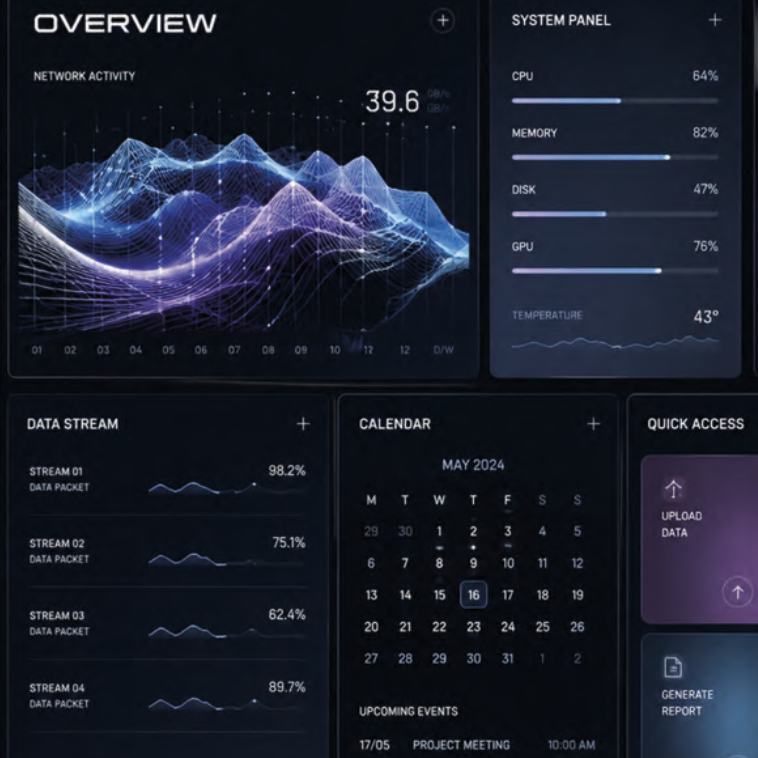
Why do many artificially generated images appear immediately recognizable despite not referring to any precise historical reference? This apparent familiarity constitutes one of the most significant effects of contemporary generative visual culture and raises questions about the ways in which artificial intelligence systems reorganize the memory of graphic design. Drawing on the comparative analysis of images generated by different text-to-image systems through semantically neutral prompts, the paper observes the spontaneous recurrence of heterogeneous visual grammars traceable to distinct moments in the history of graphic design within contemporary synthetic production. The analysis adopts a critical visual mapping methodology to examine three domains of generative graphic production: editorial layout, digital interface, and brand identity. These domains are treated as surfaces of visual inscription upon which the formal regularities produced by algorithmic recombination become observable, making graphic continuities analytically traceable. The paper proposes a critical transposition of the concept of anemoia, understood as nostalgia for times never experienced, into the field of media studies, through which the perceptual condition produced by algorithmic synthesis is described. Seen through this lens, images generated through the recombination of iconographic repertoires from the past appear familiar despite not being attributable to specific historical references. The result is an aesthetics of familiarity without origin, in which the future of the image is constructed through the transformation of visual memories that remain active while no longer being locatable. This condition is situated within a broader hauntological reflection. Drawing on Mark Fisher's notion of the slow cancellation of the future, the paper argues that algorithmic synthesis reactivates culturally sedimented graphic systems, contributing to the reiteration of existing imaginaries rather than to the emergence of unprecedented visual horizons.
References
Baudrillard, J. (1981). Simulacres et simulation. Éditions Galilée.
Benjamin, W. (2008). The work of art in the age of its technological reproducibility (M. W. Jennings, B. Doherty, & T. Y. Levin, Eds.; E. Jephcott, R. Livingstone, H. Eiland, et al., Trans.). Harvard University Press. (Original work published 1936)
Blackwell, L. (2000). 20th-century type. Laurence King Publishing.
Bonsiepe, G. (1999). Interface: An approach to design. Jan van Eyck Akademie.
Boym, S. (2001). The future of nostalgia. Basic Books.
Crawford, K. (2021). Atlas of AI. Yale University Press.
Davis, F. (1979). Yearning for yesterday: A sociology of nostalgia. Free Press.
Derrida, J. (1994). Specters of Marx: The state of the debt, the work of mourning and the new international. Routledge.
Drucker, J. (2014). Graphesis: Visual forms of knowledge production. Harvard University Press.
Ernst, W. (2013). Digital memory and the archive. University of Minnesota Press.
Foucault, M. (1969). L'archéologie du savoir. Gallimard.
Fisher, M. (2014). Ghosts of my life: Writings on depression, hauntology and lost futures. Zero Books.
Flusser, V. (2000). Towards a philosophy of photography. Reaktion Books. (Opera originale pubblicata nel 1983)
Greiman, A. (1990). Hybrid imagery: The fusion of technology and graphic design. Watson-Guptill.
Kinross, R. (2004). Modern typography: An essay in critical history (2nd ed.). Hyphen Press.
Koenig, J. (2021). The dictionary of obscure sorrows. Simon & Schuster.
Manovich, L. (2013). Software takes command. Bloomsbury Academic.
Müller-Brockmann, J. (1981). Grid systems in graphic design. Niggli.
Müller, J., & Remington, R. R. (2015). Logo modernism. TASCHEN.
Noble, S. U. (2018). Algorithms of oppression: How search engines reinforce racism. New York University Press.
Paglen, T. (2019). Invisible images (your pictures are looking at you). https://thenewinquiry.com/invisible-images-your-pictures-are-looking-at-you/
Poynor, R. (2003). No more rules: Graphic design and postmodernism. Laurence King Publishing.
Rose, G. (2016). Visual methodologies: An introduction to researching with visual materials (4th ed.). Sage.
Somaini, A. (2023). Algorithmic images: Artificial intelligence and visual culture. Grey Room, 93, 74–115.
Srnicek, N. (2017). Platform capitalism. Polity.
Steyerl, H. (2009). In defense of the poor image. e-flux Journal, 10. https://www.e-flux.com/journal/10/61362/in-defense-of-the-poor-image/
Stiegler, B. (1998). Technics and time, 1: The fault of Epimetheus. Stanford University Press.
VanderLans, R., Licko, Z., & Gray, M. E. (1993). Emigre: Graphic design into the digital realm. Van Nostrand Reinhold.
Downloads
Published
Issue
Section
License
Copyright (c) 2026 Progetto Grafico Journal

This work is licensed under a Creative Commons Attribution-NonCommercial-ShareAlike 4.0 International License.