Design without Hands
Rebuilding a Web Application with AI
DOI:
https://doi.org/10.82068/pgjournal.2026.23.43.13Abstract
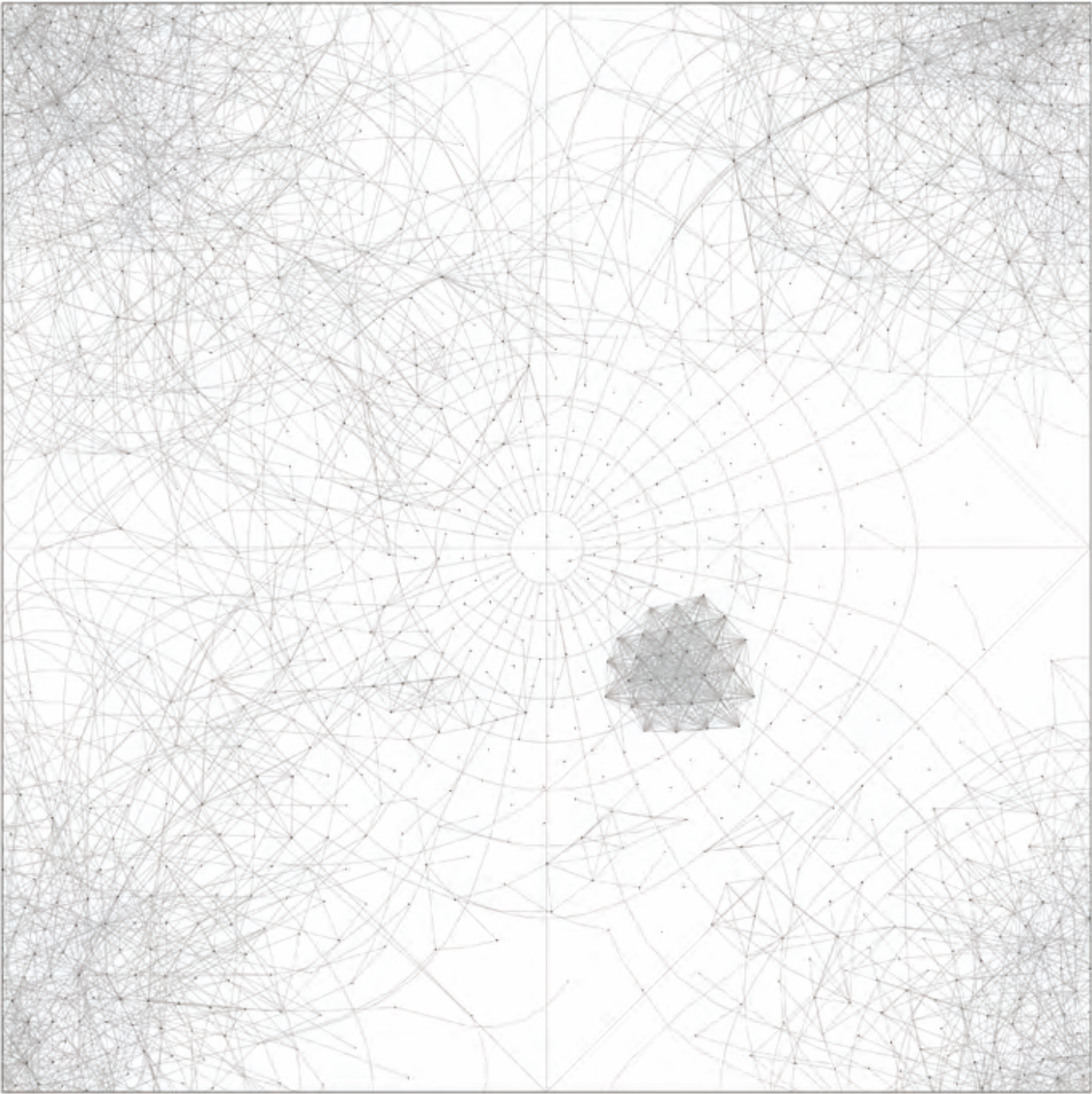
In a Bauhaus classroom, a century ago, Johannes Itten taught his students that design and form are not the same thing. Design is the generative idea; form is the object that idea becomes: the book, the chair, the lamp (Itten, 1963/1975). For Itten the seam between the two words was a lesson in reading, not a fact of production, because the same hands that conceived the work went on to make it. Design and form stayed fused in a single person, and the distinction lived quietly in theory. It no longer does. When a machine writes the code, combines the visual elements, and produces the artifact, conception and making come apart, and the question arrives with force: when the seam becomes a split, what remains on the designer's side? Victor Papanek answered long before the question could be asked: design was never style but responsibility, the answering for consequences (Clarke, 2021; Papanek, 1971/1985). More recently, Manuel Lima has gathered artifacts where the split is native: algorithms have long produced the form, and the author decides what the network means (Lima, 2011). This summer, a network visualization was rebuilt in five working sessions with a machine, without its author writing a single line of code. The results are public as a web application (Rodighiero, 2026a) and code (Rodighiero, 2026b). What was rebuilt is a co-authorship graph developed six years earlier, which lays a scientific community not on a flat surface but on a sphere (Rodighiero, 2020). The sphere was never an ornament. In a network, every flat layout condemns someone to the edges, and whoever lands there reads as peripheral, minor, almost gone. A sphere has no edge: every point on its surface is interior, and anyone can be the center if you only turn the globe. That was the original argument, representation as a matter of design justice, democratized by geometry (Costanza-Chock, 2020; Rodighiero, 2021). But a sphere cannot be printed; to reach the page it must be flattened.
References
Alberti, L. B. (1988). On the art of building in ten books (J. Rykwert, N. Leach, & R. Tavernor, Trans.). MIT Press. (Original work written ca. 1452)
Bostock, M., Ogievetsky, V., & Heer, J. (2011). D3: Data-driven documents. IEEE Transactions on Visualization and Computer Graphics, 17(12), 2301–2309. https://doi.org/10.1109/TVCG.2011.185
Bourdieu, P. (1993). The field of cultural production: Essays on art and literature (R. Johnson, Ed.). Columbia University Press.
Carpo, M. (2011). The alphabet and the algorithm. MIT Press.
Clarke, A. J. (2021). Victor Papanek: Designer for the real world. MIT Press.
Costanza-Chock, S. (2020). Design justice: Community-led practices to build the worlds we need. MIT Press. https://direct.mit.edu/books/oa-monograph/4605/Design-JusticeCommunity-Led-Practices-to-Build-the
Co-work transcript: Spherical projection [Unpublished transcript of five AI-assisted working sessions, 5–6 August 2026, extracted from Claude Code session logs]. (2026). On file with the author.
Cuff, D. (1991). Architecture: The story of practice. MIT Press.
Dilke, O. A. W. (1987). The culmination of Greek cartography in Ptolemy. In J. B. Harley & D. Woodward (Eds.), The history of cartography: Vol. 1. Cartography in prehistoric, ancient, and medieval Europe and the Mediterranean (pp. 177–200). University of Chicago Press. https://press.uchicago.edu/books/HOC/HOC_V1/HOC_VOLUME1_chapter11.pdf
Itten, J. (1975). Design and form: The basic course at the Bauhaus and later (Rev. ed.). Van Nostrand Reinhold. (Original work published 1963)
Lima, M. (2011). Visual complexity: Mapping patterns of information. Princeton Architectural Press.
Papanek, V. (1985). Design for the real world: Human ecology and social change (2nd ed.). Academy Chicago Publishers. (Original work published 1971)
Peirce, C. S. (1879). A quincuncial projection of the sphere. American Journal of Mathematics, 2(4), 394–396. https://doi.org/10.2307/2369491
Rodighiero, D. (2020). Drawing network visualizations on a continuous, spherical surface. In Proceedings of the 24th International Conference Information Visualisation (IV) (pp. 573–580). IEEE. https://doi.org/10.1109/IV51561.2020.00097
Rodighiero, D. (2021). Mapping affinities: Democratizing data visualization. Métis Presses. https://doi.org/10.37866/0563-99-9
Rodighiero, D. (2026a). Spherical projection [Web application]. https://rodighiero.github.io/spherical-projection/
Rodighiero, D. (2026b). Spherical projection [Computer software]. GitHub. https://github.com/rodighiero/spherical-projection
Downloads
Published
Issue
Section
License
Copyright (c) 2026 Progetto Grafico Journal

This work is licensed under a Creative Commons Attribution-NonCommercial-ShareAlike 4.0 International License.