Chromatophores
The Mimicry of Minorities, Code-Switching and the Queer Community
DOI:
https://doi.org/10.82068/pgjournal.2026.23.42.14Abstract
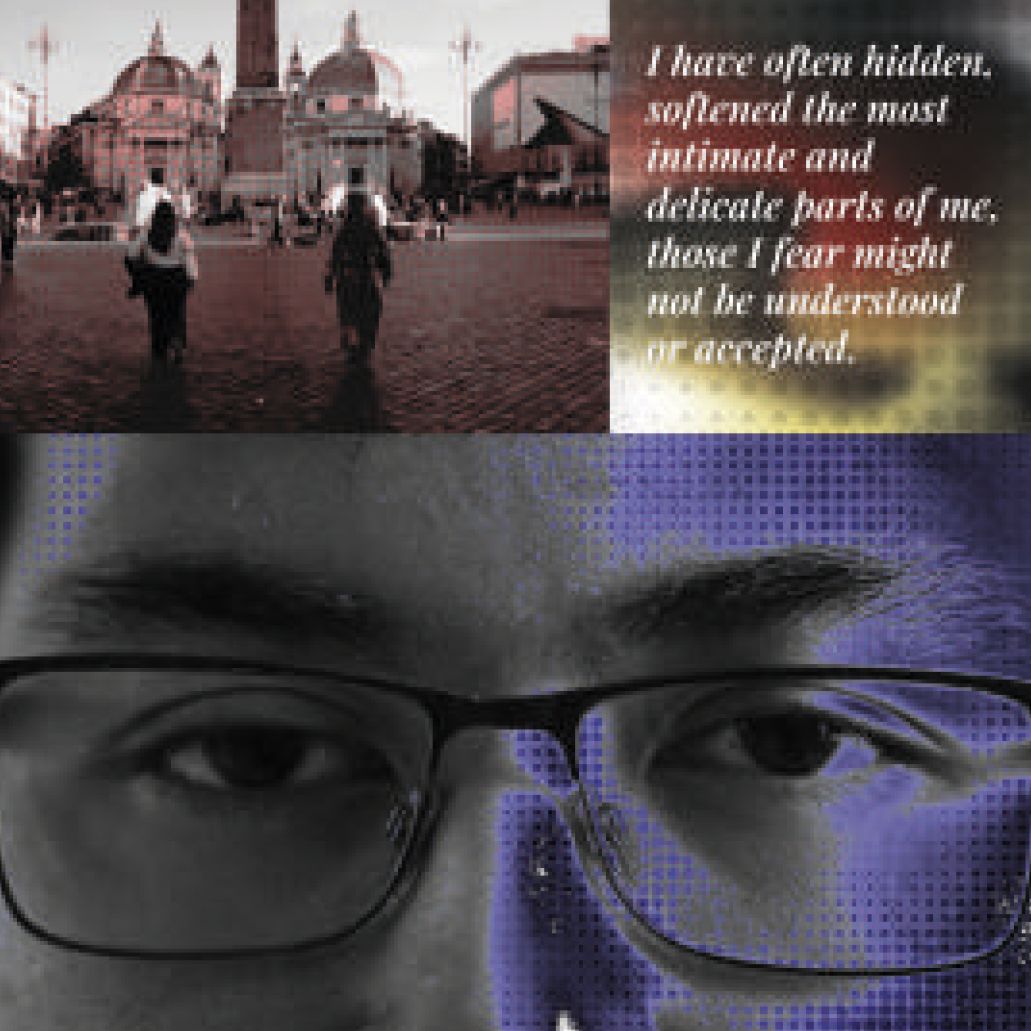
Chromatophores prompts reflection on individual freedom, posing a deep and visceral question. The project offers the opportunity to integrate new perspectives and welcome new protagonists who can contribute to a reflection on the concept of identity, even outside the queer community. Visual language can thus be seen as a tool capable of making often marginalized human issues and emotional experiences visible, fostering their understanding by a wider audience and helping to counter processes of stigmatization and social inequality.
References
Baker, P. (2013). Polari: the lost-and-found language of gay men. Babel: The Language Magazine, vol.2, pp.31-37 https://babelzine.co.uk/ArticlePDFs/No2%20Article%20-%20Polari.pdf
Cotton, C. (2009). The Photograph as Contemporary Art. London: Thames & Hudson.
Di Gennaro, K. (2023). Code-switching and Code-meshing: Is There a Difference? https://doi.org/10.13140/RG.2.2.28974.18241
Eco, U. (1975). Trattato di semiotica generale. Bompiani. https://www.amazon.it/Trattato-semiotica-generale-Umberto-Eco/dp/8845200493
Fromkin, V., Rodman, R., & Hyams, N. (2003). An introduction to language (7th ed.). Heinle & Heinle.
Gumperz, J. J. (1982). Discourse Strategies. Cambridge: Cambridge University Press. https://doi.org/10.1111/JOLA.12023
Haugen, E. (1950). The analysis of linguistic borrowing. Language, 26(2), 210–231. http://dx.doi.org/10.2307/410058
Manzini, E. (2015). Design, When Everybody Designs. The Mit Press. https://mitpress.mit.edu/9780262028608/design-when-everybody-designs/
Meyer, I. (1995). Minority Stress and Mental Health in Gay Men. Journal of Health and Social Behavior, vol.36, pp. 38-56. https://doi.org/10.2307/2137286urlappend=%3Futm_source%3Dresearchgate.net%26utm_medium%3Darticle
Papanek, V. (1971). Design for the real world: Human ecology and social change. New York: Pantheon Books.
Pasquandrea, S. (2007). Code-switching e identità: pratiche discorsive di famiglie italiane in paesi anglofoni. https://tesidottorato.depositolegale.it/handle/20.500.14242/128891
Poplack, S. (2001). Code Switching: Linguistic. Wright, J. (a cura di), International Encyclopedia of the Social & Behavioral Sciences (pp.2062-2065). Baltes. https://doi.org/10.1016/B0-08-043076-7/03031-X
Zurlo, F., Colombo, F., Pei, X. (2024).Il ruolo del design per affrontare le Sfide Sociali contemporanee: come formare i designer del futuro. Martino, C., Ranzo, P., Tamborrini, P., Tosi, F., Zurlo, F. (a cura di), La formazione universitaria del Design nel cambiamento d’epoca (pp. 22-27).
Downloads
Additional Files
Published
Issue
Section
License
Copyright (c) 2026 Progetto Grafico Journal

This work is licensed under a Creative Commons Attribution-NonCommercial-ShareAlike 4.0 International License.