Image. Text. Politics.
Disrupting the Stream of Images Through the Codex
DOI:
https://doi.org/10.82068/pgjournal.2025.22.41.06Keywords:
Image Overflow, Digital Image, Book as Medium, Reader Agency, Critical PracticeAbstract
In the age of visual overproduction, the digital image has become a continuous and ubiquitous stream—characterized by speed, excess, and instant accessibility. This perceptual overload leads to a passive and superficial consumption of visual content, hindering a critical and in-depth understanding of reality. Within this context, the book—not only as a physical object but as a media device with its own pace, rhythms, and languages—regains a strategic function: that of interrupting, defusing, and reframing the flow. When examined for its critical and projective potential, the book emerges as a space of resistance, a site for deceleration, and a tool for renegotiating the gaze.
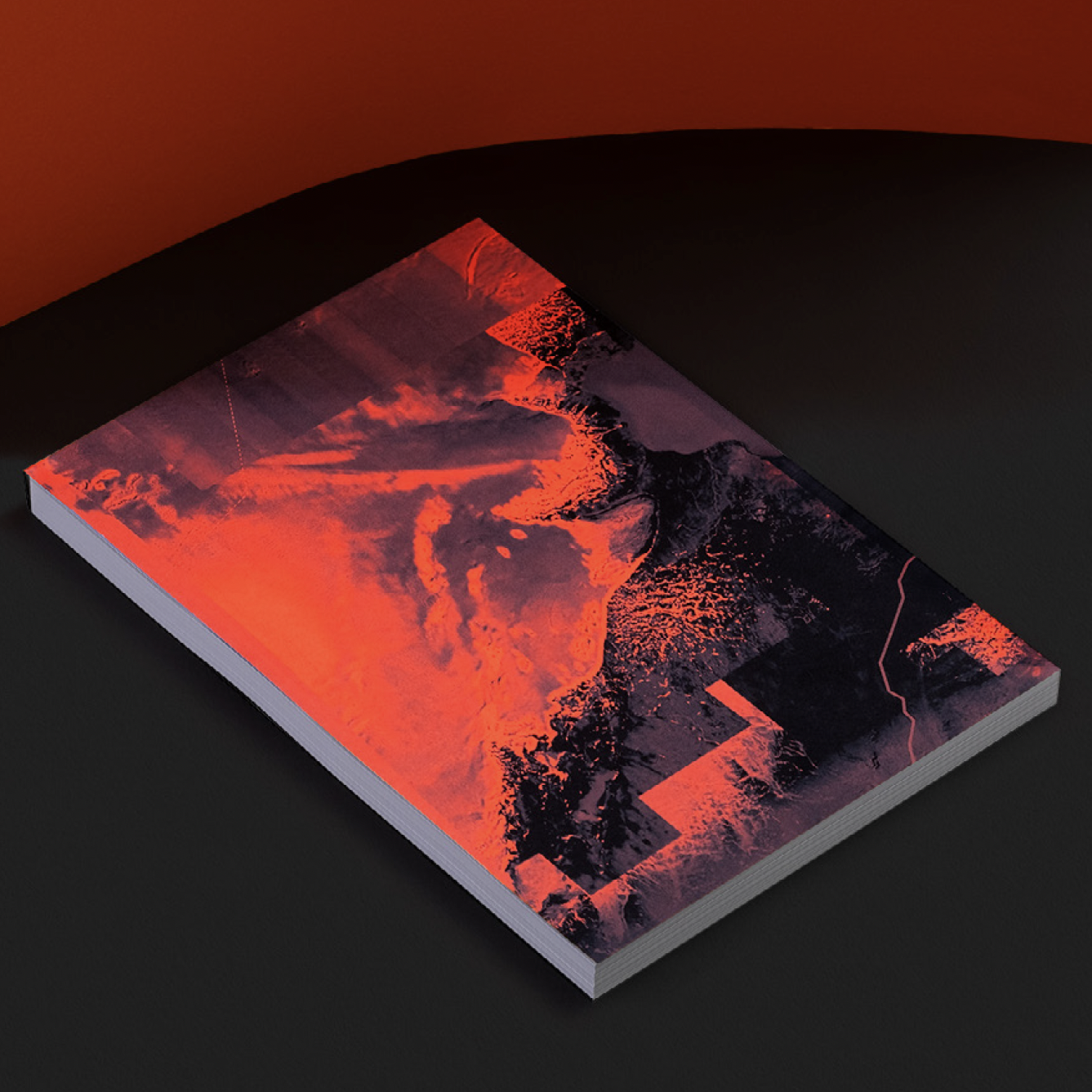
This paper explores this hypothesis through a selection of publications developed in recent years at Studio Image, a visual research lab experimenting with hybrid editorial forms that intersect photography, text, and editorial design. The analyzed works, conceived as alternative ‘codices’ to dominant visual communication, challenge the immediacy of images by offering modes of reading and interpretation that are deeper, layered, and more conscious. In this sense, the book is not an analog relic, but an active device capable of critically engaging with the visual present and restoring agency to the viewer/reader.
References
Barthes, R. (1977). Rhetoric of the image (S. Heath, Trans.). In R. Barthes, Image, music, text (pp. 32–51). Hill and Wang.
Beegan, G. (2008). The mass image. Palgrave.
Berger, J. (1967). A fortunate man: The story of a country doctor. Allen Lane, Penguin Press.
Berger, J. (1972). Ways of seeing. Penguin Books.
Berger, J., & Mohr, J. (1975). A seventh man. Penguin Books.
Berger, J., & Mohr, J. (1982). Another way of telling. Penguin Books.
Biasetton, N. (2024). Superstorm: Design and politics in the age of information. Onomatopee.
Burnett, D. G., Loh, A., & Schmidt, P. (2023, November 24). Powerful forces are fracking our attention: We can fight back. The New York Times. https://www.nytimes.com/2023/11/24/opinion/attention-economy-education.html
Butler, J. (2015). Notes toward a performative theory of assembly. Harvard University Press.
Carrión, U. (1975). The new art of making books. Kontexts, 6–7, 169–175.
Crawford, K. (2021). Atlas of AI: Power, politics, and the planetary costs of artificial intelligence. Yale University Press.
Drucker, J. (2014). Graphesis: Visual forms of knowledge production. Harvard University Press.
Elkins, J. (2001). The domain of images. Cornell University Press.
Elkins, J. (2003). Visual studies: A skeptical introduction. Routledge.
Fontcuberta, J. (2018). La furia delle immagini. Einaudi.
Fricker, M. (2007). Epistemic injustice: Power and the ethics of knowing. Oxford University Press.
Grau, O. (Ed.). (2011). Imagery in the 21st century. MIT Press.
Haraway, D. J. (1988). Situated knowledges: The science question in feminism and the privilege of partial perspective. Feminist Studies, 14(3), 575–599. https://doi.org/10.2307/3178066
Jay, M. (1993). Downcast eyes: The denigration of vision in twentieth-century French thought. University of California Press.
Jenkins, H. (2006). Convergence culture: Where old and new media collide. New York University Press.
Kornbluh, A. (2024). Immediacy, or the style of too late capitalism. Verso Books.
Latour, B. (2005). Reassembling the social: An introduction to actor-network-theory. Oxford University Press.
Latour, B., & Woolgar, S. (1986). Laboratory life: The construction of scientific facts (2nd ed.). Princeton University Press.
Leitolf, E., & Cordin, G. (2021). Shoot & think. Negotiating images. Free University of Bozen-Bolzano.
Leitolf, E., & Cordin, G. (2023). Landscape (with)out locus. Nero Editions.
Leitolf, E., & Cordin, G. (2025). Violent images. Nero Editions.
Lovink, G. (2011). Networks without a cause: A critique of social media. Polity Press.
Lovink, G. (2016). Sad by design: On platform nihilism. Pluto Press.
Manovich, L. (2017). Instagram and contemporary image. University of Minnesota Press.
Melito, F., & Zulianello, M. (2025). Populist visual communication: A state-of-the-art review. Political Studies Review, 23(1), 3–18. https://doi.org/10.1177/14789299231209622
Mirzoeff, N. (2011). The right to look: A counterhistory of visuality. Duke University Press.
Mirzoeff, N. (2015). How to see the world. Pelican Books.
Mitchell, W. J. T. (1994). Picture theory: Essays on verbal and visual representation. University of Chicago Press.
Mitchell, W. J. T. (2005). What do pictures want? The lives and loves of images. University of Chicago Press.
Paglen, T. (2016). Invisible images (your pictures are looking at you). The New Inquiry. https://thenewinquiry.com/invisible-images-your-pictures-are-looking-at-you/
Perondi, L. (2012). Sinsemie: Scritture nello spazio. Stampa Alternativa & Graffiti.
Petresin, V. (2023). Beyond text: Visual literacy and knowledge production in contemporary academia. Palgrave Macmillan.
Rancière, J. (2000). Le partage du sensible: Esthétique et politique. La Fabrique Éditions.
Rancière, J. (2007). The future of the image. Verso Books.
Reinhardt, M. (2025). Killing aesthetics? On some changing forms of visual violence. In E. Leitolf & G. Cordin (Eds.), Violent images (pp. 185–212). Nero Editions.
Rose, G. (2016). Visual methodologies: An introduction to researching with visual materials (4th ed.). Sage Publications.
Rosler, M. (1981). 3 works. The Nova Scotia Pamphlets.
Sontag, S. (1977). On photography. Farrar, Straus and Giroux.
Sontag, S. (2003). Regarding the pain of others. Farrar, Straus and Giroux.
Stafford, B. (1998). Good looking: Essays on the virtue of images. MIT Press.
Steyerl, H. (2012). The wretched of the screen. Sternberg Press.
Steyerl, H. (2017). Duty-free art: Art in the age of planetary civil war. Verso Books.
Toffler, A. (1980). The third wave. Bantam Books.
Žižek, S. (2008). Violence: Six sideways reflections. Profile.
Zuboff, S. (2019). The age of surveillance capitalism: The fight for a human future at the new frontier of power. Public Affairs.
Downloads
Published
Issue
Section
License
Copyright (c) 2025 Progetto Grafico Journal

This work is licensed under a Creative Commons Attribution-NonCommercial-ShareAlike 4.0 International License.