Rules First, Forms Later
Unreadable Alphabets and Type Design Education
DOI:
https://doi.org/10.82068/pgjournal.2026.23.43.17Keywords:
Type Design, Lettering, Abstract Alphabets, Design Education, Generative SystemsAbstract
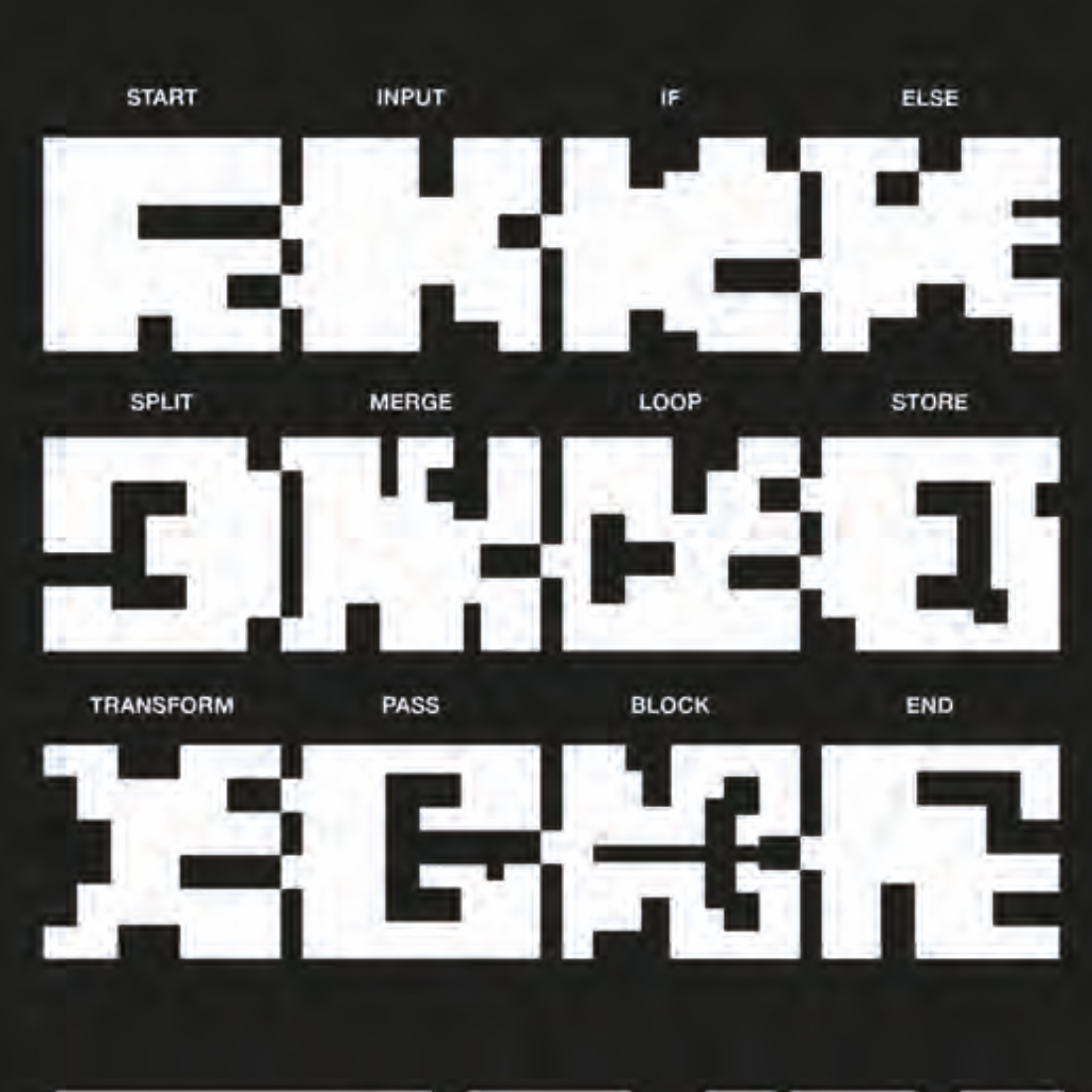
A recurring practice in visual culture is the construction of unreadable alphabets, graphic systems that are not immediately decipherable. This is not a deviation from functional writing but a design exercise capable of making normally invisible aspects of typographic practice visible. By removing the conventional decoding function from signs, attention shifts to the structures that govern their operation: generative principles, formal relationships, spatial organisation, code construction. In the didactic perspective proposed here, the design of unreadable alphabets is considered a pedagogical tool capable of suspending established perceptual automatisms and compelling students to engage with writing as a system. The contribution presents a selection of case studies that highlight processes of application, experimentation and development of the method.
References
Andersch, M. (1989). Tracce, segni, caratteri. Sulla scrittura dei caratteri, la sperimentazione con gli alfabeti e l’interpretazione dei testi. Ulisse Edizioni, Torino.
Bandinelli, A., Lussu, G., Iacobelli, R. (1990). Farsi un libro. Propedeutica dell'autoproduzione: orientamenti e spunti per un'impresa consapevole. O per una serena rinuncia. Biblioteca del Vascello / Stampa Alternativa, Roma.
Bringhurst, R. (2004). The elements of typographic style (3rd ed.). Hartley & Marks, Vancouver, Canada.
Dalgarno, G. (1661). Ars signorum, vulgo Character universalis et lingua philosophica. Excudebat J. Hayes, Londini.
Drucker, J. (1994). The Visible Word: Experimental Typography and Modern Art, 1909–1923. University of Chicago Press, Chicago, Illinois.
Eco, U. (1993). La ricerca della lingua perfetta nella cultura europea. Laterza, Roma-Bari.
Gerstner, K. (2019). Designing Programmes. Programme as typeface, typography, picture, method. Lars Müller Publishers. (Prima edizione 1964).
Harris, R. (1998). L'origine della scrittura. Stampa Alternativa, Viterbo.
Hochuli, J. (2008). Detail in typography. Letters, letterspacing, words, wordspacing, lines, linespacing, columns. Hyphen Press, London.
Kircher, A. (1663). Polygraphia nova et universalis ex combinatoria arte detecta. Qua quivis etiam linguarum quantumuis imperitus triplici methodo. Ex typographia Varesij, Rome.
Leibniz, G. W. (1666). Dissertatio de arte combinatoria. Joh Simon Fickium et Joh Polycarp Seuboldum, Leipzig.
Lussu, G. (1999). La lettera uccide. Storie di grafica. Stampa Alternativa & Graffiti, Viterbo.
Lussu, G. (2013). Tebe dalle sette porte. ISIA, Urbino.
Lussu, G. (2016). Altri fiumi, altri laghi, altre campagne e altre storie di grafica. Stampa Alternativa, Viterbo.
Noordzij, G. (2005). The Stroke: Theory of Writing. Hyphen Press, London. (Prima edizione olandese 1985).
Peterson, D. J. (2009). Stick to the Script: Orthographies, Fonts and Philosophy. Third Language Creation Conference, Providence.
Peterson, D. J. (2015). The Art of Language Invention. Penguin Books, New York.
Perondi, L. (2012). Sinsemie. Scritture nello spazio. Stampa Alternativa & Graffiti, Viterbo.
Serafini, L. (1981). Codex Seraphinianus. Franco Maria Ricci, Milano.
Unger, G. (2007). While You're Reading. Mark Batty Publisher, New York.
Venditti, D. (2026). Protocollo Hal Zaan. Un sistema di scrittura generativa basato su modelli morfogenetici. Tesi di laurea triennale, Accademia di Belle Arti di Napoli.
Wilkins, J. (1668). An Essay towards a Real Character and a Philosophical Language. Sa. Gellibrand, and John Martyn, Royal Society, Londra.
Downloads
Published
Issue
Section
License
Copyright (c) 2026 Progetto Grafico Journal

This work is licensed under a Creative Commons Attribution-NonCommercial-ShareAlike 4.0 International License.