Alfabetizzazione delle reti
Come comprendere, progettare e leggere modelli relazionali visivi
DOI:
https://doi.org/10.82068/pgjournal.2025.22.41.08Parole chiave:
Alfabetizzazione delle Reti, Design dell'Informazione, Visualizzazione dei Dati, Modelli Relazionali, Complessità CulturaleAbstract
I modelli ci aiutano a capire la complessità offrendo strutture semplificate che rendono leggibili le dinamiche sociali altrimenti invisibili. In questo contesto, le reti si distinguono per la loro capacità di rappresentare informazioni relazionali: nodi e collegamenti riducono la società ad attori e connessioni, facendo emergere schemi che spesso restano nascosti ai nostri occhi. Dal XVIII secolo le reti sono passate dall’essere curiosi oggetti matematici a strumenti essenziali in molte discipline. Le prime visualizzazioni di rete rivelavano schemi di amicizia in classe mettendo in luce legami sociali, mentre oggi gli studi computazionali mappano una grande diversità di dati, dalle ricette di cucina alle collaborazioni scientifiche.
Con la loro grammatica visuale, le reti oggi invitano al confronto, alla classificazione e all’interpretazione in una moltitudine di discipline. La loro diffusione, però, porta anche rischi: le reti possono essere scambiate per spazi oggettivi, i nodi centrali per più importanti, e la densità ammirata per l’estetica. Per affrontare queste sfide serve una nuova forma di alfabetizzazione. L’alfabetizzazione delle reti può essere definita come la capacità di comprendere, progettare e leggere modelli relazionali visivi, unendo conoscenze concettuali di sistemi complessi a competenze pratiche di visualizzazione e interpretazione critica.
Questo articolo sviluppa l’idea di alfabetizzazione delle reti come competenza civica e professionale, mettendo in dialogo le tradizioni di alfabetizzazione dei dati e visiva. Ripercorre la storia delle reti dalle origini matematiche fino alla loro integrazione nei media digitali, mostrando una nuova modalità di lettura relazionale. L’articolo esplora tre dimensioni delle reti: le scelte progettuali che plasmano il significato, il pensiero spaziale che guida l’interpretazione e i progetti sperimentali che trasformano la visualizzazione in pratica performativa. Collocando le reti all’incrocio tra design dell’informazione, ricerca critica e pratica culturale, l’articolo sostiene che diffondere l’alfabetizzazione delle reti sia essenziale per confrontarsi con il design della conoscenza nel il tessuto sociale di oggi.
Riferimenti bibliografici
Barabási, A.-L. (2002). Linked: The new science of networks. Perseus Pub.
Barabási, A.-L., Bello, M., Kluge-Fabényi, J., Stang, A., & Weibel, P. (Eds.). (2020). Hidden patterns: Visualizing networks at BarabásiLab. Hatje Cantz Verlag.
Bastian, M., Heymann, S., & Jacomy, M. (2009). Gephi: An open source software for exploring and manipulating networks. Proceedings of the Third International ICWSM Conference.
Blasius, J., & Schmitz, A. (2014). Empirical construction of Bourdieu’s social space. In Visualization and verbalization of data. CRC Press.
Bostock, M. (2017, April 28). A better way to code. Introducing D3.Express: The integrated discovery environment. Medium. https://medium.com/@mbostock/a-better-way-to-code-2b1d2876a3a0
Bostock, M., Ogievetsky, V., & Heer, J. (2011). D3: Data-driven documents. IEEE Transactions on Visualization and Computer Graphics, 17(12), 2301–2309. https://doi.org/10.1109/TVCG.2011.185
Boullier, D. (2018). Médialab stories: How to align actor network theory and digital methods. Big Data & Society, 5(2), 205395171881672. https://doi.org/10/gfpmxh
Bourdieu, P. (1984). Distinction: A social critique of the judgement of taste. Harvard University Press. (Original work published 1979)
D’Ignazio, C. (2017). Creative data literacy: Bridging the gap between the data-haves and data-have nots. Information Design Journal, 23(1), 6–18. https://doi.org/10.1075/idj.23.1.03dig
Dondis, D. A. (1975). A primer of visual literacy. MIT Press. (Original work published 1973)
Duhaime, D. (2021). PixPlot (Version 2.0) [Computer software]. Yale Digital Humanities Lab. https://github.com/YaleDHLab/pix-plot
Eco, U. (2009). Vertigine della lista. Bompiani.
Euler, L. (1953). Leonhard Euler and the Koenigsberg bridges. Scientific American, 189(1), 66–72. http://www.jstor.org/stable/24944279
Ficozzi, M., Jacomy, M., Rodighiero, D., Beaulieu, A., & Munk, A. K. (2025). Grounding AI map: The consequences of living with the trouble of an irreductionist map. Design et Abstractions, Revue Design Arts Medias. https://journal.dampress.org/issues/design-et-abstractions/grounding-ai-map-the-consequences-of-living-with-the-trouble-of-an-irreductionist-map
Grandjean, M. (2014). La connaissance est un réseau. Perspective sur l’organisation archivistique et encyclopédique. Les Cahiers Du Numérique, 10(3), 37–54. https://doi.org/10.3166/lcn.10.3.37-54
Grandjean, M. (2015). GEPHI – Introduction to network analysis and visualization. http://www.martingrandjean.ch/gephi-introduction
Grandjean, M. (2021, June 30). Introduction to social network analysis: Basics and historical specificities [Conference presentation]. HNR+ResHist Conference. https://halshs.archives-ouvertes.fr/halshs-03351755/document
Gray, J., Gerlitz, C., & Bounegru, L. (2018). Data infrastructure literacy. Big Data & Society, 5(2). https://doi.org/10.1177/2053951718786316
Harman, G. (2009). Prince of networks: Bruno Latour and metaphysics. Re.press. https://re-press.org/title/prince-of-networks-bruno-latour-and-metaphysics/
Hobbs, R. C. (2004). Mark Lombardi: Global networks. Independent Curators International.
Jacomy, M., Venturini, T., Heymann, S., & Bastian, M. (2014). ForceAtlas2, a continuous graph layout algorithm for handy network visualization designed for the Gephi software. PLoS ONE, 9(6), e98679. https://doi.org/10.1371/journal.pone.0098679
Latour, B. (2005). Reassembling the social: An introduction to actor-network-theory. Oxford University Press.
Latour, B. (2013). An inquiry into modes of existence: An anthropology of the moderns. Harvard University Press.
Lazer, D. M. J., Pentland, A., Adamic, L., Aral, S., Barabási, A.-L., Brewer, D., Christakis, N., Contractor, N., Fowler, J., Gutmann, M., Jebara, T., King, G., Macy, M., Roy, D., & Van Alstyne, M. (2009). Computational social science. Science, 323(5915), 721–723. https://doi.org/10.1126/science.1167742
Lévy, J., Maitre, O., & Romany, T. (2016). Rebattre les cartes: Topographie et topologie dans la cartographie contemporaine. Réseaux, 195(1), 17–48. https://doi.org/10/ghqdk7
Lima, M. (2011). Visual complexity: Mapping patterns of information. Princeton Architectural Press.
Löwgren, J., & Stolterman, E. (2004). Thoughtful interaction design: A design perspective on information technology. MIT Press.
Maaten, L. van der, & Hinton, G. (2008). Visualizing data using t-SNE. Journal of Machine Learning Research, 9(86), 2579–2605. http://jmlr.org/papers/v9/vandermaaten08a.html
Manovich, L. (2018). Can we think without categories? Digital Culture & Society, 4(1), 17–27. https://doi.org/10/gjt7qq
Marres, N. (2017). Digital sociology: The reinvention of social research. Polity.
McInnes, L. (2025). Toponymy [Computer software]. GitHub. https://github.com/TutteInstitute/toponymy
McInnes, L., Healy, J., & Melville, J. (2018). UMAP: Uniform manifold approximation and projection for dimension reduction. arXiv. https://doi.org/10.48550/arXiv.1802.03426
Moreno, J. L. (1934). Who shall survive? Nervous and Mental Disease Publishing Co.
Mounier, P. (2001). Pierre Bourdieu, une introduction. Pocket/La Découverte.
Munk, A. K., Jacomy, M., Ficozzi, M., & Jensen, T. E. (2024). Beyond artificial intelligence controversies: What are algorithms doing in the scientific literature? Big Data & Society, 11(3), 20539517241255107. https://doi.org/10.1177/20539517241255107
Noichl, M. (2019). Modeling the structure of recent philosophy. Synthese, 198(7), 6631–6661. https://doi.org/10/ghp7f4
Ricci, D., De Mourat, R., Leclercq, C., & Latour, B. (2017). Clues. Anomalies. Understanding. Detecting underlying assumptions and expected practices in the digital humanities through the AIME project. In E. Reyes-Garcia & N. Bouhaï (Eds.), Designing interactive hypermedia systems. John Wiley & Sons, Inc. https://doi.org/10.1002/9781119388272.ch6
Rodighiero, D. (2021). Mapping affinities: Democratizing data visualization. Métis Presses. https://doi.org/10.37866/0563-99-9
Rodighiero, D., Derry, L., Duhaime, D., Pietsch, C., Senier, S., Walsh, M., & Schnapp, J. (2022). Surprise machines: Revealing Harvard Art Museums’ image collection. Information Design Journal, 27(1), 21–34. https://doi.org/10.1075/idj.22013.rod
Romele, A. (2020). Digital hermeneutics: Philosophical investigations in new media and technologies. Routledge/Taylor & Francis Group.
Romele, A., & Rodighiero, D. (2020). Digital habitus or personalization without personality. HUMANA.MENTE Journal of Philosophical Studies, 13(37), 98–126. https://doi.org/10.5281/zenodo.3950030
Sachs, H., Stiebitz, M., & Wilson, R. J. (1988). An historical note: Euler’s Königsberg letters. Journal of Graph Theory, 12(1), 133–139. https://doi.org/10.1002/jgt.3190120114
Scott, J. (2000). Social network analysis: A handbook (2nd ed.). SAGE Publications.
Shields, R. (2012). Cultural topology: The seven bridges of Königsburg, 1736. Theory, Culture & Society, 29(4–5), 43–57. https://doi.org/10.1177/0263276412451161
Venturini, T., Jacomy, M., Baneyx, A., & Girard, P. (2016). Hors champs. La multipositionnalité par l’analyse des réseaux. Réseaux, 199(5), 11–42. https://doi.org/10/ghmsrh
Venturini, T., Jacomy, M., & Jensen, P. (2021). What do we see when we look at networks: Visual network analysis, relational ambiguity, and force-directed layouts. Big Data & Society, 8(1), 20539517211018488. https://doi.org/10.1177/20539517211018488
Venturini, T., Munk, A. K., & Jacomy, M. (2019). Actor-network vs network analysis vs digital networks: Are we talking about the same networks? In J. Vertesi & D. Ribes (Eds.), DigitalSTS: A field guide for science & technology studies. Princeton University Press.
Windhager, F., Salisu, S., Leite, R. A., Filipov, V., & Miksch, S. (2020). Many views are not enough: Designing for synoptic insights in cultural collections. IEEE Computer Graphics and Applications, 40(3), 58–71.
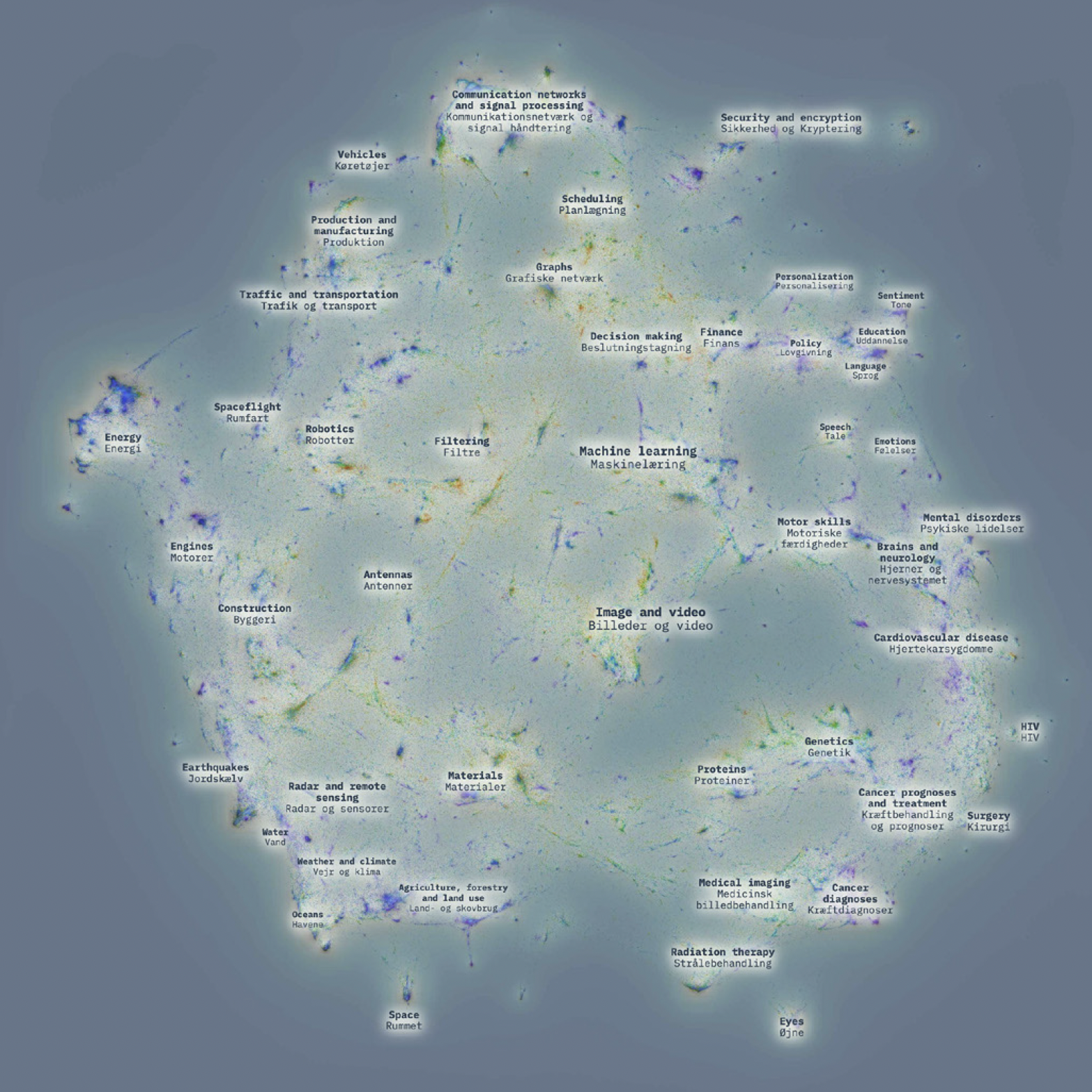
Dowloads
Pubblicato
Fascicolo
Sezione
Licenza
Copyright (c) 2025 Progetto Grafico Journal

Questo volume è pubblicato con la licenza Creative Commons Attribuzione - Non commerciale - Condividi allo stesso modo 4.0 Internazionale.