Immagine. Testo. Politica.
Interrompere il flusso delle immagini attraverso il codice
DOI:
https://doi.org/10.82068/pgjournal.2025.22.41.06Parole chiave:
Overflow Immagini, Immagine Digitale, Libro come Medium, Agency del Lettore, Pratica CriticaAbstract
Nell’era contemporanea dell’iperproduzione visiva, l’immagine digitale si è trasformata in flusso continuo e ubiquo, caratterizzato da velocità, sovrabbondanza e accessibilità istantanea. Questo sovraccarico percettivo genera un consumo passivo e superficiale dei contenuti visivi, ostacolando una comprensione critica e profonda della realtà. In questo contesto, il libro — inteso non solo come oggetto fisico ma come dispositivo mediale con tempi, ritmi e linguaggi propri — riacquista una funzione strategica: quella di interrompere, disinnescare e ricontestualizzare il flusso. Quando interrogato nel suo potenziale critico e progettuale, il libro si propone come spazio di resistenza, luogo di decelerazione e strumento di rinegoziazione dello sguardo.
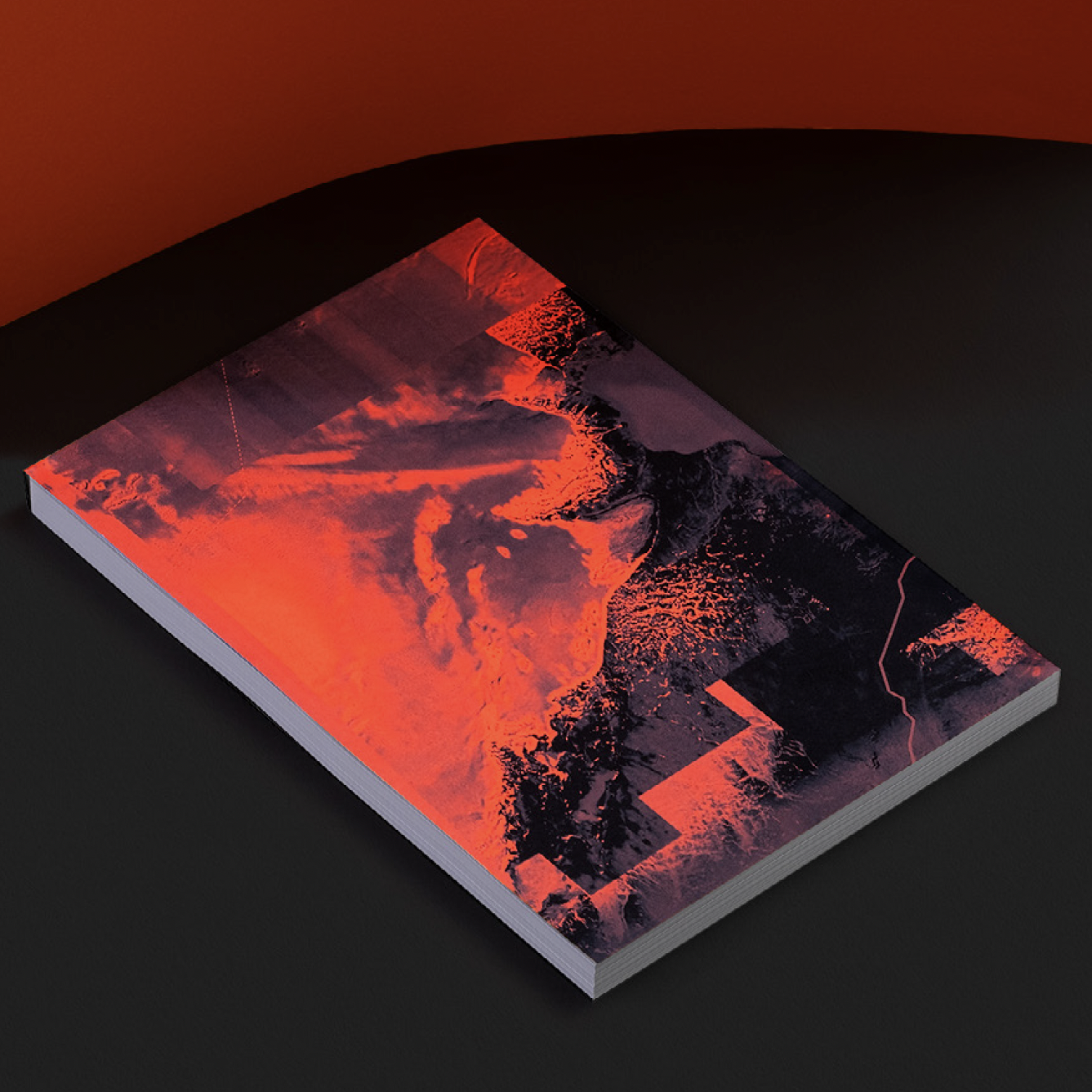
Questo paper esplora tale ipotesi attraverso una selezione di pubblicazioni realizzate negli ultimi anni all'interno di Studio Image, un laboratorio di ricerca visiva che sperimenta forme editoriali ibride tra fotografia, testo e grafica. Le pubblicazioni analizzate, concepite come veri e propri ‘codici’ alternativi alla comunicazione visiva dominante, mettono in crisi l’immediatezza delle immagini, proponendo modalità di lettura e interpretazione più profonde, stratificate e consapevoli. Il libro, in questo senso, non è nostalgia analogica ma dispositivo attivo, capace di agire criticamente sul presente visivo e restituire agency al lettore/osservatore.
Riferimenti bibliografici
Barthes, R. (1977). Rhetoric of the image (S. Heath, Trans.). In R. Barthes, Image, music, text (pp. 32–51). Hill and Wang.
Beegan, G. (2008). The mass image. Palgrave.
Berger, J. (1967). A fortunate man: The story of a country doctor. Allen Lane, Penguin Press.
Berger, J. (1972). Ways of seeing. Penguin Books.
Berger, J., & Mohr, J. (1975). A seventh man. Penguin Books.
Berger, J., & Mohr, J. (1982). Another way of telling. Penguin Books.
Biasetton, N. (2024). Superstorm: Design and politics in the age of information. Onomatopee.
Burnett, D. G., Loh, A., & Schmidt, P. (2023, November 24). Powerful forces are fracking our attention: We can fight back. The New York Times. https://www.nytimes.com/2023/11/24/opinion/attention-economy-education.html
Butler, J. (2015). Notes toward a performative theory of assembly. Harvard University Press.
Carrión, U. (1975). The new art of making books. Kontexts, 6–7, 169–175.
Crawford, K. (2021). Atlas of AI: Power, politics, and the planetary costs of artificial intelligence. Yale University Press.
Drucker, J. (2014). Graphesis: Visual forms of knowledge production. Harvard University Press.
Elkins, J. (2001). The domain of images. Cornell University Press.
Elkins, J. (2003). Visual studies: A skeptical introduction. Routledge.
Fontcuberta, J. (2018). La furia delle immagini. Einaudi.
Fricker, M. (2007). Epistemic injustice: Power and the ethics of knowing. Oxford University Press.
Grau, O. (Ed.). (2011). Imagery in the 21st century. MIT Press.
Haraway, D. J. (1988). Situated knowledges: The science question in feminism and the privilege of partial perspective. Feminist Studies, 14(3), 575–599. https://doi.org/10.2307/3178066
Jay, M. (1993). Downcast eyes: The denigration of vision in twentieth-century French thought. University of California Press.
Jenkins, H. (2006). Convergence culture: Where old and new media collide. New York University Press.
Kornbluh, A. (2024). Immediacy, or the style of too late capitalism. Verso Books.
Latour, B. (2005). Reassembling the social: An introduction to actor-network-theory. Oxford University Press.
Latour, B., & Woolgar, S. (1986). Laboratory life: The construction of scientific facts (2nd ed.). Princeton University Press.
Leitolf, E., & Cordin, G. (2021). Shoot & think. Negotiating images. Free University of Bozen-Bolzano.
Leitolf, E., & Cordin, G. (2023). Landscape (with)out locus. Nero Editions.
Leitolf, E., & Cordin, G. (2025). Violent images. Nero Editions.
Lovink, G. (2011). Networks without a cause: A critique of social media. Polity Press.
Lovink, G. (2016). Sad by design: On platform nihilism. Pluto Press.
Manovich, L. (2017). Instagram and contemporary image. University of Minnesota Press.
Melito, F., & Zulianello, M. (2025). Populist visual communication: A state-of-the-art review. Political Studies Review, 23(1), 3–18. https://doi.org/10.1177/14789299231209622
Mirzoeff, N. (2011). The right to look: A counterhistory of visuality. Duke University Press.
Mirzoeff, N. (2015). How to see the world. Pelican Books.
Mitchell, W. J. T. (1994). Picture theory: Essays on verbal and visual representation. University of Chicago Press.
Mitchell, W. J. T. (2005). What do pictures want? The lives and loves of images. University of Chicago Press.
Paglen, T. (2016). Invisible images (your pictures are looking at you). The New Inquiry. https://thenewinquiry.com/invisible-images-your-pictures-are-looking-at-you/
Perondi, L. (2012). Sinsemie: Scritture nello spazio. Stampa Alternativa & Graffiti.
Petresin, V. (2023). Beyond text: Visual literacy and knowledge production in contemporary academia. Palgrave Macmillan.
Rancière, J. (2000). Le partage du sensible: Esthétique et politique. La Fabrique Éditions.
Rancière, J. (2007). The future of the image. Verso Books.
Reinhardt, M. (2025). Killing aesthetics? On some changing forms of visual violence. In E. Leitolf & G. Cordin (Eds.), Violent images (pp. 185–212). Nero Editions.
Rose, G. (2016). Visual methodologies: An introduction to researching with visual materials (4th ed.). Sage Publications.
Rosler, M. (1981). 3 works. The Nova Scotia Pamphlets.
Sontag, S. (1977). On photography. Farrar, Straus and Giroux.
Sontag, S. (2003). Regarding the pain of others. Farrar, Straus and Giroux.
Stafford, B. (1998). Good looking: Essays on the virtue of images. MIT Press.
Steyerl, H. (2012). The wretched of the screen. Sternberg Press.
Steyerl, H. (2017). Duty-free art: Art in the age of planetary civil war. Verso Books.
Toffler, A. (1980). The third wave. Bantam Books.
Žižek, S. (2008). Violence: Six sideways reflections. Profile.
Zuboff, S. (2019). The age of surveillance capitalism: The fight for a human future at the new frontier of power. Public Affairs.
Dowloads
Pubblicato
Fascicolo
Sezione
Licenza
Copyright (c) 2025 Progetto Grafico Journal

Questo volume è pubblicato con la licenza Creative Commons Attribuzione - Non commerciale - Condividi allo stesso modo 4.0 Internazionale.