Rendere visibile il conflitto
Il design della comunicazione visiva come pratica critica, pedagogica e politica
DOI:
https://doi.org/10.82068/pgjournal.2026.23.42.11Parole chiave:
Mappatura Collettiva, Cartografia Critica, Apprendimento Trasformativo, Design Literacy, Didattica TransdisciplinareAbstract
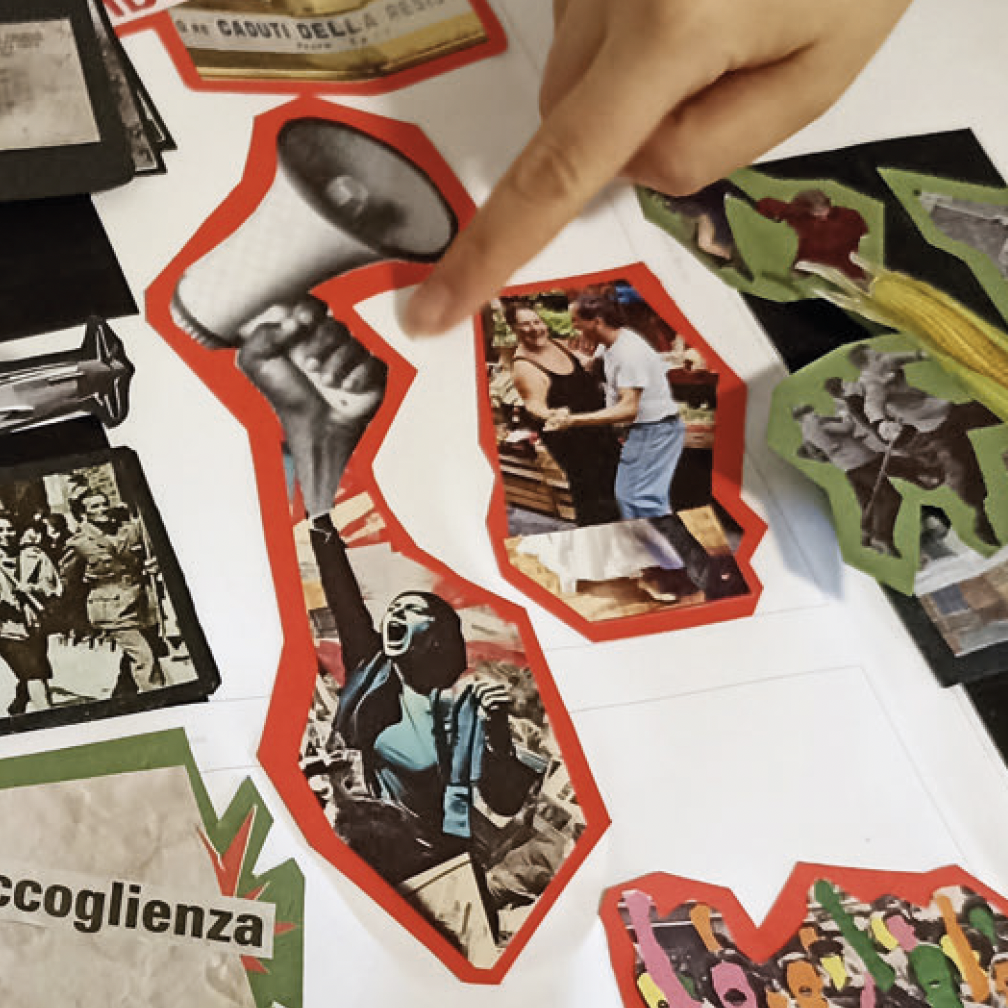
L'articolo indaga il potenziale del design della comunicazione visiva come pratica critica, pedagogica e politica. Viene delineato un quadro teorico che interpreta il design come pratica agonistica e riflessiva, volta a rendere visibili le tensioni e i conflitti che strutturano lo spazio pubblico. La ricerca si sviluppa attraverso la sperimentazione progettuale del laboratorio Critical and collective mapping, condotto presso l'Università di Padova. L'esperienza, che ha coinvolto studenti di geografia, dimostra come l'uso di specifici design devices — strumenti grafici volti a facilitare il confronto e la progettazione collettiva — possa attivare processi di apprendimento trasformativo e sviluppare una design literacy critica. Attraverso l'impiego di metodi qualitativi e autoetnografici, l'esperienza qui raccontata evidenzia come la mappatura collettiva e il progetto grafico ad essa associato possano costituire pratiche di riappropriazione critica dello spazio vissuto.
Riferimenti bibliografici
Adil, R. (2022). Use of images to support critical visual literacy. Thinking Skills and Creativity, 45, 101046.
Akama, Y., & Yee, J. (2019). Embracing plurality in designing social innovation practices. Design and Culture, 11(1), 1–11.
Cairo, A. (2020). Come i grafici mentono: capire meglio le informazioni visive. Raffaello Cortina Editore.
Crampton, J. W. (2011). Mapping: A critical introduction to cartography and GIS. John Wiley & Sons.
D'Ignazio, C., & Klein, L. (2020). Data feminism. MIT Press
DiSalvo, C. (2012). Adversarial design. MIT Press.
DiSalvo, C. (2019). Design, democrazia e pluralismo agonistico. In A. Facchetti (Ed.), Design & Conflicts (pp. 4–23). Krisis Publishing.
Drucker, J. (2014). Knowledge design: A conceptual and curricular challenge. Design and Culture, 6(1), 65-83.
Ehn, P. (2008). Participation in design things. In Participatory Design Conference (pp. 92–101). ACM Digital Library.
Escobar, A. (2018). Designs for the pluriverse: Radical interdependence, autonomy, and the making of worlds. Duke University Press.
Facchetti, A. (2019). Introduzione. In A. Facchetti (Ed.), Design & Conflicts (pp. 4–23). Krisis Publishing.
Freire, P. (2011). Pedagogia degli oppressi. Edizioni Gruppo Abele.
Fry, T. (2009). Design futuring. University of New South Wales Press.
Grove, K., Krivý, M., Rickards, L., Schliwa, G., Collier, S. J., Cox, S., & Gandy, M. (2019). Interventions on design and political geography. Political Geography, 74, 102017.
Hall, P. (2019). Bolle, linee e stringhe. In che modo la data visualization informa la realtà. In A. Facchetti (Ed.), Design & Conflicts (pp. 4–23). Krisis Publishing.
Haraway, D. (2013). Situated knowledges: The science question in feminism and the privilege of partial perspective 1. In Women, science, and technology (pp. 455-472). Routledge.
Hawkins, H. (2015). Creative geographic methods: Knowing, representing, intervening. Cultural Geographies, 22(2), 247–268.
Harley, J. B. (1989). Deconstructing the map. Cartographica, 26(2), 1–20.
Harvey, D. (1992). Social justice, postmodernism and the city. International Journal of Urban & Regional Research, 16(4), 588–601.
Iconoclasistas. (2021). New devices for thinking the common. FIELD: A Journal of Socially-Engaged Art Criticism.
Iconoclasistas, D. (2022). Organic methodology and feelthink machines. Revista Heterotopías, FFyH, UNC.
Kolb, A. Y., & Kolb, D. A. (2006). Learning styles and learning spaces: A review of the multidisciplinary application of experiential learning theory in higher education. In Learning styles and learning: A key to meeting the accountability demands in education (pp. 45–91).
Latour, B. (2017). Facing Gaia: Eight lectures on the new climatic regime. John Wiley & Sons.
Light, A. (2019). Design and social innovation at the margins: Finding and making cultures of plurality (Version 1). University of Sussex.
Mang, P., & Reed, B. (2012). Designing from place: A regenerative framework and methodology. Building Research & Information, 40(1), 23–38.
Massey, D. (2005). For space. Sage.
McCoy, K. (2003). Good citizenship: Design as a social force. In V. Vienne & S. Heller (Eds.), Citizen designer: Perspectives on design responsibility. Allworth Press.
Mezirow, J. (2008). An overview on transformative learning. Lifelong Learning, 40–54.
Mouffe, C. (2019). Arte e democrazia. Arte come intervento agonistico nello spazio pubblico. In A. Facchetti (Ed.), Design & Conflicts (pp. 4–23). Krisis Publishing.
Novoa, M. (2022). Insurgent heritage: Mobilizing memory, place‐based care and cultural citizenships. International Journal of Urban and Regional Research, 46(6), 1016–1034.
Pinotti, A., & Somaini, A. (2016). Cultura visuale: immagini, sguardi, media, dispositivi (Vol. 653). Einaudi.
Schweizer, P., Halder, S., & kollektiv orangotango. (2024). Don’t believe the mapping hype! Three steps back for an engaged cartography. In The Routledge Handbook of Cartographic Humanities (pp. 54–60). Routledge.
Swann, C. (2002). Action research and the practice of design. Design Issues, 18(1), 49–61.
Von Benzon, N., Wilkinson, S., Wilkinson, C., & Holton, M. (2021). Creative methods for human geographers. Sage Publishing.
Dowloads
Pubblicato
Fascicolo
Sezione
Licenza
Copyright (c) 2026 Progetto Grafico Journal

Questo volume è pubblicato con la licenza Creative Commons Attribuzione - Non commerciale - Condividi allo stesso modo 4.0 Internazionale.